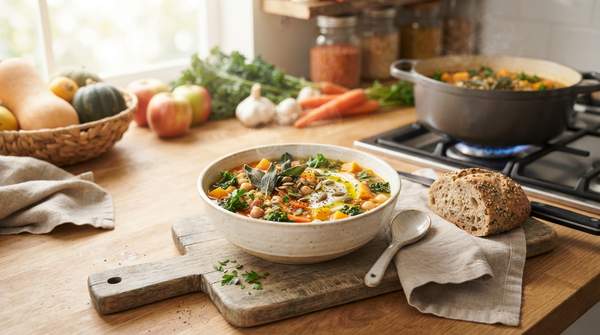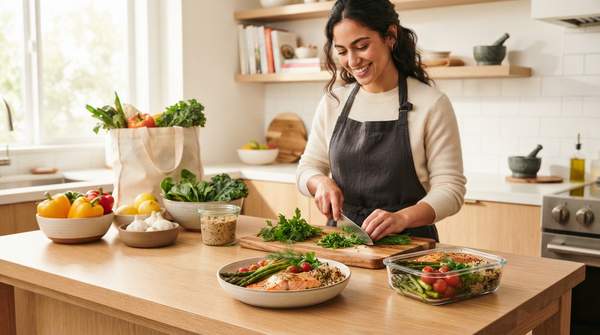
Cooking healthy meals for a one- or two-person household comes down to three coordinated habits: planning two meals from a single entrée, buying small quantities at the bulk bins, salad bar, and deli counter, and judging serving sizes with everyday visual cues. Nutrition educators at the University of Nebraska Extension and Mayo Clinic Health System offer a framework that ties these habits together, so a single cooking session becomes several varied meals instead of a week of identical leftovers.
Mastering Meal Planning for One or Two: The 'Cook Once, Eat Twice' System
The core principle, as Nebraska Extension puts it, is simple: "Cook once, eat twice." Plan two meals from the same entrée, and separate out the extra food before you sit down to eat — not after, when second helpings have a way of disappearing. Extras eaten within three to four days stay in the fridge; anything beyond that goes to the freezer for longer storage.
Registered dietitian Kristi Wempen, writing for Mayo Clinic Health System, suggests cooking a pound or two of meat or a whole chicken and dividing it up for casseroles, tacos, and salads. A crockpot roast one day becomes sliced sandwiches later. Extra pasta can turn into a cold salad the next day, and individual frozen portions become a quick reheat later in the week.
The point is not repetition but transformation. Brown University Health's meal planning guidance frames it as getting creative with repurposing: leftover roast chicken stirred into quick-cooking rice and frozen vegetables becomes a variation on fried rice, while leftover yogurt tops baked oatmeal or granola. This approach requires some creativity in adapting recipes and ingredients, but it solves the two biggest complaints of solo cooks — waste and monotony — at once.
Smart Shopping Strategies for Small Households
Standard family-size packaging is the enemy of the small household. Wempen's advice is to shop the bulk bins and the salad bar, where you can buy exactly the amount you need and prevent waste. Yes, you might pay a little more per pound, but if you actually use what you buy, you save money in the end — spoiled food is the most expensive food of all.
The deli counter deserves the same attention. There you can purchase a single chicken breast, a quarter pound of meat, or just a few slices of cheese. These smaller portions also keep you from the boredom of eating the same foods day after day, since nothing needs to be stretched across five dinners.
When planning, start with vegetables and build the rest of the meal around them, Wempen recommends — a habit that aligns with Nebraska Extension's guidance to make half your plate fruits and vegetables, switch to fat-free or low-fat milk, and make at least half your grains whole grains. If you do buy frozen or convenience meals, compare nutrition labels, watching sodium and saturated fat, and total carbohydrates if you have diabetes.