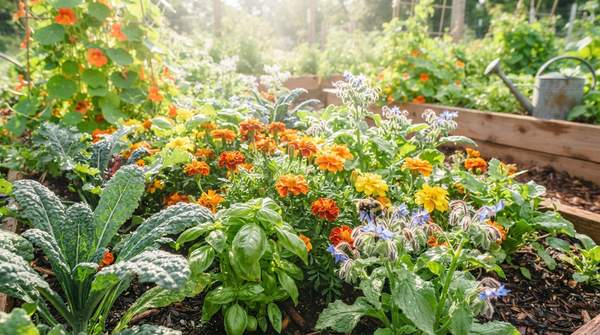
Companion planting, the practice of growing different crops near one another, is a scientifically-grounded strategy for improving plant health and productivity in a home garden. Far from folklore, this approach leverages natural relationships between plants to deter pests, attract beneficial insects, and enhance soil conditions. By understanding the science behind these interactions, gardeners can move beyond simply memorizing plant pairs and begin designing a resilient, thriving garden ecosystem tailored to their specific needs.
The core benefit of companion planting is increased biodiversity. According to guidance from Washington State University Extension, a garden with a complex web of plants is better able to withstand disruptions, such as a pest infestation, than a garden with only one or two types of crops. This diversity can reduce the need for chemical pesticides and fertilizers, forming a key part of an integrated pest management strategy.
Companion Planting Mechanisms: A Decision Framework
To effectively use companion planting, it helps to match your gardening goal with the specific scientific mechanism that can achieve it. This framework allows you to select appropriate plants to solve problems like pest infestations or poor soil, or to enhance pollination.
| Gardening Goal | Scientific Mechanism | Planting Strategy Example |
|---|---|---|
| Deter or confuse pests | Pest Repulsion & Masking Some plants release strong-smelling chemicals that repel pests or mask the scent of a target crop, making it harder for insects to find. |
Planting onions near carrots can help deter the carrot rust fly. Similarly, the strong scent of mint can help repel cabbage moths from cabbage-family plants. |
| Control pest populations naturally | Attracting Beneficial Insects Flowering plants provide nectar, pollen, and shelter for predatory insects (like ladybugs) and parasitic wasps that prey on common garden pests. |
Incorporate flowers into vegetable beds. According to Washington State University Extension, this provides food and habitat for beneficial insects that help control pest populations. |
| Improve soil fertility | Soil Health Improvement Certain plants, particularly legumes, can "fix" atmospheric nitrogen, converting it into a form that other plants can use. Others add organic matter when they decompose. |
Planting nitrogen-fixing crops like beans or peas can enrich the soil, naturally reducing the need for fertilizers for subsequent crops. |
| Maximize space and create microclimates | Physical & Structural Support Plants can offer physical benefits to one another, such as providing shade, acting as a natural trellis, or serving as a ground cover to suppress weeds. |
Taller, sturdy plants like corn can provide a structure for climbing plants like beans to grow on. This technique maximizes garden space and can offer shade to sun-sensitive crops. |
Natural Pest Control and Deterrence
One of the most powerful applications of companion planting is for natural pest management. This works in two primary ways: repelling harmful insects and masking the presence of a desirable crop. Some plants emit volatile organic compounds from their leaves and flowers that are unpleasant to certain pests. For example, the strong aroma of onions can interfere with a carrot rust fly’s ability to locate carrots, offering a degree of protection.
This strategy of "scent masking" can be highly effective. When a garden is planted with a monoculture—all the same crop together—it creates a strong, uniform signal for pests that specialize in that plant. By interplanting aromatic herbs or flowers, you can break up that signal, creating a confusing landscape for insects and making it more difficult for an infestation to take hold. West Virginia University Extension notes that mixing plant types can prevent the rapid spread of pests and diseases that often occurs in uniform plantings.
Attracting Beneficial Insects and Pollinators
Beyond repelling pests, companion plants can actively recruit a garden's allies. Many flowering plants serve as a food source and habitat for beneficial insects, including predators, parasitoids, and pollinators. Predators like ladybugs and lacewings feed on common pests such as aphids, while tiny parasitic wasps lay their eggs inside pest insects, controlling their populations from within. According to Master Gardeners of Northern Virginia, adding these "garden buds" increases plant diversity and brings in more beneficial insects to establish natural pest controls.
To implement this, a gardener can integrate a variety of flowering plants throughout their vegetable beds. These plants provide essential nectar and pollen that adult beneficial insects need to survive and reproduce. A garden that supports a healthy population of these allies is more resilient and balanced, leading to healthier plants and higher yields without a reliance on chemical interventions.
Enhancing Soil Health and Providing Physical Support
Companion planting also works below the ground and in the physical structure of the garden. Certain plants have the ability to improve soil fertility. Legumes, such as beans and peas, form a symbiotic relationship with soil bacteria that allows them to capture nitrogen from the atmosphere and convert it into a form usable by other plants. This process, known as nitrogen fixation, naturally enriches the soil.
Plants can also provide physical support and create beneficial microclimates. As described by permaculture author Kirsten Bradley, this can be as simple as one plant providing shade for another or acting as a living trellis. The classic "Three Sisters" garden—corn, beans, and squash—is a prime example. The corn provides a stalk for the beans to climb, the beans fix nitrogen in the soil, and the large leaves of the squash shade the ground, suppressing weeds and conserving moisture.
Cultivating a Resilient Garden: Your Next Steps
To create a more productive and sustainable garden, implement a companion planting strategy by selecting plants based on specific garden goals and the scientific mechanisms outlined, rather than relying on generic lists. Start by identifying a need in your garden—whether it's aphid control, better pollination for your squash, or richer soil for heavy-feeding crops. Then, use the principles of pest repulsion, beneficial insect attraction, or soil improvement to choose appropriate companions.
The effectiveness of any pairing can vary with local climate and soil conditions, so observation is key. A successful outcome can be measured by reduced pest damage, increased presence of beneficial insects, and improved plant vigor in your garden over a growing season. As Washington State University Extension advises, the goal is to create a more complex and diverse food web in your garden, as this "is better able to tolerate removal of some components" and build a truly resilient ecosystem.
Sources
- Gardening with Companion Plants (Home Garden Series) — PUBS
- Extension
- Companion Planting — Master Gardeners of Northern Virginia
- Companion Planting with Permaculture: Follow The Plants — Milkwood: permaculture courses, skills + stories