Yes, the science points to a real connection: farms that combine no-till planting, cover crops, and diverse rotations build measurably healthier soil, and preliminary paired-farm comparisons show crops from those systems carrying higher levels of certain vitamins, minerals, and phytochemicals—along with a better fatty acid profile in grazing-raised meat. But the evidence is still early, and the story matters more than the label. Understanding which practices drive which changes below ground is what turns a marketing buzzword into a basis for choosing your food.
Understanding Regenerative Agriculture: Core Practices
"Regenerative" is an umbrella term rather than a single certified method. In the research literature, it describes farming systems that rebuild soil organic matter and soil health—most often through a combination of no-till planting, cover crops, and diverse crop rotations. One line of paired-farm trials across the United States calls this trio "Conservation Agriculture," and measured fields farmed this way for five to ten years showed higher soil organic matter and higher soil health scores than conventionally managed neighboring fields, where synthetic fertilizers, herbicide treatments, and intensive tillage were the norm.
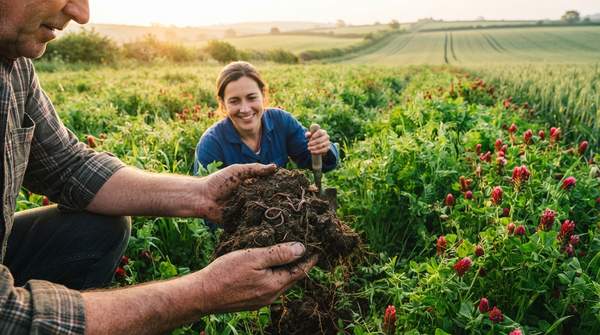
The intuition behind the approach is simple: soil is not an inert medium but a living ecosystem, and the question researchers have begun testing is whether treating it that one way or another changes what ends up on the plate. As the soil scientists David Montgomery and Anne Biklé note, higher yields have been correlated with reductions in the nutrient density of plants, and numerous studies point to declines in soil quality under certain agricultural practices as a possible culprit. That framing—soil health as an underappreciated influence on nutrition—is what the rest of this article unpacks.
How Regenerative Practices Transform Soil Health
The three core practices work through different mechanisms, and the clearest way to see their individual contributions is side by side. Each one addresses a different form of disruption that conventional tillage-based farming imposes on the soil ecosystem—physical disturbance, bare ground, and monotony.
| Agricultural Practice | Mechanism of Action | Primary Soil Health Benefit |
|---|---|---|
| No-till farming | Minimizes soil disturbance and leaves crop residues on the surface, protecting the physical structure and the habitats of soil microbes. | Improved soil structure, increased organic carbon, reduced erosion, and greater microbial biomass. |
| Cover cropping | Maintains continuous living roots between main harvest cycles, keeping the soil microbiome fed year-round. | Enhanced microbial life, more soil organic matter, and improved nutrient cycling. |
| Diverse crop rotations | Varies the crops grown across seasons, diversifying what the soil community receives and processes. | Contributes to soil organic matter and functions as part of the combined regenerative system; its standalone effects are less granularly documented than the other two practices. |
Two specific findings anchor the comparison. A twelve-year comparison of conventionally tilled and no-till fields found that no-till farming produced higher soil organic matter, greater microbial biomass, and more plant-available zinc in the soil. Introducing a cover crop on top of that increased plant-available iron. And a review of 54 field studies found that less intensive tillage combined with cover cropping greatly increased mycorrhizal colonization of crop roots—the beneficial fungal partnerships that help plants take up nutrients. In other words, these practices stack: each removes a different stressor, and their benefits compound.