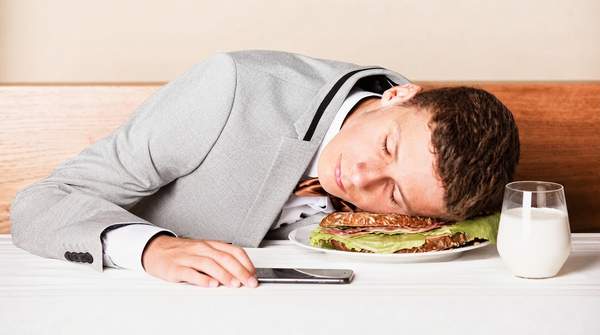
That heavy, drowsy feeling after a meal—often called a "food coma"—is usually the result of two overlapping processes: a blood sugar spike-and-crash driven by what you ate, and hormonal sleep signals your gut releases in response to a large or rich meal. The good news is that both are largely shaped by meal composition, portion size, and timing, which means the afternoon slump is often something you can design your way out of.
Understanding the 'Food Coma': What is Post-Meal Fatigue?
Clinicians call this phenomenon postprandial somnolence, and the Cleveland Clinic describes it as the drowsiness that follows eating. It is common enough to have earned a nickname, but it is not a single uniform event. The Sleep Foundation notes that several biological processes contribute to drowsiness after a meal, including circadian rhythms—the natural 24-hour fluctuations in body temperature, hormones, and metabolism. Those wakefulness-promoting signals tend to dip in the early afternoon, which is one reason sleepiness so often follows lunch rather than breakfast.
Sleep quality matters too. According to the Sleep Foundation, if you sleep poorly at night or don't get the sleep you need, post-meal drowsiness tends to be more intense because of increased sleep drive. In other words, the meal is rarely the sole culprit; it interacts with your body clock and your sleep debt. Still, the composition of the meal is the factor most within your control, and it is where the sharpest swings in energy come from.
The Blood Sugar Rollercoaster: How Carbs Drive Energy Crashes
The clearest pathway from plate to pillow runs through glucose. As Nutrisense's health editors explain, significant peaks and valleys in glucose values cause postprandial fatigue—what most people call a sugar crash. Meals built around simple sugars and refined starches are converted to glucose quickly, sending blood sugar up fast. The body responds with a surge of insulin to pull that glucose out of the bloodstream, and the faster the rise, the steeper the fall that follows it.
Harvard Health draws the same line between food type and energy curve: because different foods are converted to energy at different rates, candy and other simple sugars give a quick lift, while whole grains and healthy unsaturated fats supply reserves you can draw on throughout the day. The quick boost from refined sugar "fades quickly and can leave you depleted and craving more sweets," Harvard's editors caution. NutritionEd.org's editorial staff summarizes the same pattern from the productivity angle: complex carbohydrates, lean proteins, and omega-3-rich foods enhance focus and sustained energy, while high-sugar and saturated-fat foods cause crashes.