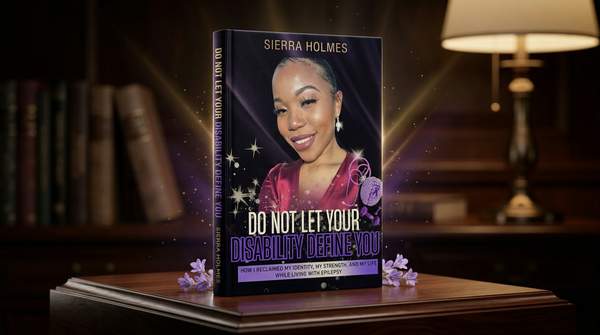
At a disability memoir book club, it takes one well-meant question to put someone on the spot. “Has anything like this happened to anyone here?” can leave people doing quick calculations about what they want the room to know. Give everyone a passage to talk about first, and let personal stories come up when someone chooses to share one.
Sierra Holmes’s Do Not Let Your Disability Define You, an ebook from Neuro-Dynamic World, gives the group something to discuss before anyone opens to the first page. Holmes writes about living with epilepsy and reclaiming her identity. Read the title aloud and you may hear advice, while the subtitle sounds like someone beginning to tell her own story.
What Changes When You Read the Title and Subtitle Together?
Put Do Not Let Your Disability Define You beside How I Reclaimed My Identity, My Strength, and My Life While Living With Epilepsy. Ask each person to pick a word that changes their expectations for the book.
Someone may pick “reclaimed” and wonder what Holmes felt she had lost. Someone else may notice the shift from “you” in the title to “I” in the subtitle and hear a change in who’s being asked to speak.
Give this question a second turn at the end of the meeting. Someone who heard the title as a broad instruction at first might hear it as personal after reading the book. Another person may still feel some friction between the two lines on the cover.
Ask what influenced each response. Then see whether the group can point to anything in the text that made someone hear the title differently.
What Made You Pause Long Enough to Mark a Page?
Ask everyone to bring a passage they marked and say what caught their attention. If someone picks a line about acceptance, for example, ask what made them notice that particular use of the word. If someone brings a passage for its tone or a question it raised, follow what they heard.
Someone may say a passage felt hopeful and find that another person heard frustration in it. Give the group a minute to look at the same words before asking what led to each interpretation. The two people may have been paying attention to different parts of the passage.
Which Word Could the Group Spend Five Minutes On?
Pick a word from the book description, such as “resilience,” and ask what each person expects it to mean in a memoir. To one person it might suggest a way of carrying on through uncertainty. To someone else it might sound like a word people reach for when they expect a person with a disability to make others feel better about a difficult story.
Once those meanings are on the table, ask whether anyone found language in the book that confirmed or complicated their expectation. If a member chose a different word entirely, ask what made that one more precise for them. The most revealing discussion may be about a term you didn’t come prepared to ask about.
If the room starts making broad statements about what living with epilepsy is like, ask which part comes from Holmes’s account and which part is the group’s interpretation. Someone can say, “Here’s how I heard that,” and leave space for another person to read it differently. That leaves room to talk seriously about what Holmes shares without expecting one book to settle the subject.
Where Did Two People Read the Book Differently?
Imagine a member says that what stayed with them was the idea of reclaiming something, while another is more interested in whether an old idea of success is worth keeping. Ask what each was paying attention to and what led them there.
You can ask each person to summarize what they heard the other say. They may discover they’re answering different questions about what a person gets to keep when something in their life changes.
This is a good moment to give people the option to write down a response or pass. The person who has been quiet may have an observation about the language and no interest in talking about their own health. Give them the same invitation you’d give everyone else, then let them decide how much they want to say.
What Would You Ask a Friend to Pay Attention To?
For the last round, have everyone finish the sentence “Pay attention to…” Someone might name the part of the title that sounds different to them now, while another person might describe a question the book left open. Each answer gives the group a glimpse of what the person is likely to remember after the discussion.
You can send that question ahead of the meeting so people can think about it while they read. Some will arrive with a passage. Others will have a question they can put into a sentence sooner than they can explain how they felt about the whole book.
Frequently Asked Questions
What if some people haven’t finished the book?
Start with the cover and invite comments on passages people have reached. Tell the group before discussing a later part of the book so anyone who wants to read it first can step away.
What if nobody brings a marked passage?
The host can bring one and give everyone a minute to read it quietly. Ask each person to pick a word they might use to explain what stayed with them about the passage.
Can someone join the discussion without talking about personal experience?
Yes. Members can talk about the language, write a response, or listen and pass on a question. Say that at the beginning so people can take part without having to explain why they prefer one option.
Send the First Question With the Invitation
The description at Neuro-Dynamic World gives your group a short introduction to Holmes and the questions of identity behind her memoir. When you’re ready to put it on the calendar, ask members to get their copy of Do Not Let Your Disability Define You. Send the title-and-subtitle question with the date and ask everyone to bring one passage they’d like to hear in somebody else’s voice.