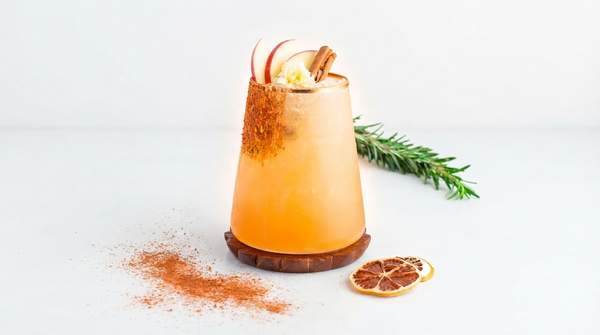
You can turn the making and drinking of a non-alcoholic cocktail into a small, deliberate ritual—what might be called slow mixology—by breaking the process into four stages: sourcing with intention, preparing ingredients through the senses, assembling with care, and consuming deliberately. The framework itself is a synthesis drawn from documented ideas in mindful drinking and craft mixology rather than a model any single source names outright, but each stage rests on real, credited practice.
Embracing Slow Living Through Mindful Mixology
Slow living, at its core, is about doing fewer things with more attention. Non-alcoholic cocktails suit this philosophy unusually well, because without alcohol doing the sensory work, the drink's interest has to come from what you put into it. Writing on mindful drinking, De Soi describes the creative process of sourcing unique ingredients, combining textures, and balancing flavors as "a fun and rewarding experience" in its own right—one that redefines the ritual of drinking rather than merely replacing it.
Food writer Heidi Swanson captures the same spirit from the enjoyment side, calling a special drink at the end of the day "a favorite ritual… a celebration of sorts, and a way to transition from to-do list mode into a more relaxed frame of mind." That transition—from task mode to presence—is exactly what a slower approach to mixology is designed to produce.
The Four Stages of Slow Mixology
The framework below deconstructs the drink into distinct stages, each with a focus and a concrete action, so that attention has somewhere to land at every step. It draws on spirits expert Derek Brown's Mindful Mixology: A Comprehensive Guide to No- and Low-Alcohol Cocktails (January 2022), his techniques as discussed on the Modern Bar Cart podcast, and the mindful-drinking perspectives above.
| Stage | Focus | Action |
|---|---|---|
| Sourcing & Intention | Deliberate ingredient selection and a clear purpose for the drink | Experiment with diverse recipes and distinctive ingredients—exotic fruit infusions, non-alcoholic bitters, syrups |
| Sensory Preparation | Engage smell, touch, and sound while preparing ingredients | Muddle herbs, zest citrus, build foams and silky textures |
| Mindful Assembly | Precision and presence in combining ingredients | Balance taste, texture, body, and piquancy as you mix |
| Deliberate Consumption | Drinking as ceremony rather than reflex | Sip slowly, noticing how flavors evolve |
Stage 1: Sourcing & Intention – The Foundation of Flavor
Begin before the cutting board, by deciding what this drink is for. Is it a wind-down at the end of the day, a celebration, or simply curiosity about a new flavor? Naming the purpose is itself a mindful act, and it shapes what you buy. De Soi's guidance to "explore new options" means sampling diverse recipes—from exotic fruit infusions to elaborate herbal concoctions—so your palate stays "engaged and curious."
Brown's book points to a practical home pantry for this stage: non-alcoholic bitters, salt tincture, ginger syrup, and lemon oleo saccharum among its building blocks. Sourcing a few of these, rather than a full bar's worth of equipment, is enough to give a home drinker genuinely complex raw material to work with.
Stage 2: Sensory Preparation – Engaging All Your Senses
Preparation is where slow mixology earns its name, because every technique is a sensory event. Tearing herbs releases aroma before it releases flavor; zesting citrus puts volatile oils in the air; grinding or brewing an ingredient—as with the kava roots and botanical teas The Chill Room describes as traditional ceremonial preparation—makes sound and scent part of the process. The care put into each cup, that source notes, is part of the drink's meaning.
One of Brown's own techniques makes texture audible. His recipe combining lemon juice, verjus, strawberry juice, maple syrup, aquafaba, and salt tincture uses what he calls the "reverse dry shake": shake with ice until chilled and diluted, remove the ice, then shake again without it "until you hear the texture get all foamy and silky from that aquafaba." Listening for that change is a literal mindfulness cue—you can't rush what you're waiting to hear.
Stage 3: Mindful Assembly – Crafting with Care
Assembly is where intention meets precision. The publisher's description of Brown's book is direct about the standard: "Creating these drinks isn't as simple as removing the alcohol." His drinks are described as "meticulously choreographed around taste, texture, body, and piquancy to result in surprisingly complex 'adult beverages' minus the booze."
Treat those four elements—taste, texture, body, piquancy—as a checklist as you combine. Taste as you go; notice whether the drink feels thin or rounded on the tongue; check whether a drop of acid or salt tincture sharpens the other flavors. Each adjustment is a small decision made with full attention, which is the whole practice in miniature.
Stage 4: Deliberate Consumption – Savoring the Moment
The final stage returns to Swanson's framing: a special drink is a way of transitioning out of the day's task mode. Drink it as such—seated, unhurried, without a screen. Take the first sip slowly and notice the top notes, then the middle, then the finish; a well-balanced no-proof drink evolves on the palate in a way a rushed one never reveals.
Cultural precedent supports treating this as ceremony rather than consumption. The Chill Room's account of traditional kava and botanical tea preparation describes drinking as "deeply ceremonial, emphasizing respect and harmony." You don't need a formal tradition to borrow the posture: set the glass down between sips, and let the drink mark the boundary between the day's effort and the evening's ease.
Elevating Your Drink: Advanced Sensory Mixology Techniques
Once the four-stage rhythm feels natural, specific techniques deepen the sensory payoff. For aroma, express citrus peel over the glass and choose garnishes you have to crush or tear to release their oils. For texture, aquafaba foams—via the reverse dry shake—add a silky cap that changes mouthfeel dramatically. For depth, layer building blocks rather than single juices: a shrub or fruit syrup for acidity-sweetness tension, non-alcoholic bitters for aromatic complexity, a few drops of salt tincture to sharpen everything else.
Brown's broader project, as his publisher and the Modern Bar Cart conversation describe it, is to show that no- and low-proof drinks can be "complex, sophisticated" adult beverages in their own right. The techniques above are how that complexity gets built at home, without professional equipment—only a shaker, a grater or zester, and patience.
Embrace the Ritual: Your Path to Mindful Sips
Readers can integrate slow living principles into their daily routine by consciously engaging with the process of non-alcoholic cocktail creation and consumption—sourcing with intention, preparing through the senses, assembling with precision, and drinking deliberately. The measure of success is not recipe perfection but increased personal satisfaction and a sense of calm during beverage preparation and enjoyment. If your next drink leaves you more present than when you started making it, the framework is working.