Pairing the right plant foods together can meaningfully change how much of their nutrients your body actually absorbs. This is the core idea behind nutrient synergy: when two or more nutrients are consumed together, they can exert a greater physiological effect than each would alone—what a scientific review on the topic calls the case where "the whole is greater than the sum of the parts." For plant-based eaters, this concept is especially practical, because the form in which iron, zinc, vitamins, and minerals arrive from plants differs from animal sources, and smart pairings can help close the gap.
The 'Food First' Principle: Why Whole Foods Matter
Nutrition science has long taken a reductionist approach, isolating single nutrients to study their effects on specific health outcomes. But later research on chronic disease found that isolated nutrients do not consistently reproduce the health effects associated with the foods that contain them, a finding that gave rise to the concept of food synergy—the additive or greater-than-additive effects of foods and their components on health.
The reason lies in the food matrix: the physical and chemical architecture in which nutrients exist within food. Whole foods consist of a complex matrix of nutrients, water, fiber, and bioactive compounds that interact during digestion, absorption, and metabolism in ways a single supplement cannot fully replicate. Few nutrition experts would refute a "food first" approach to optimizing health, the PMC review notes, even though consuming adequate amounts of certain nutrients from whole foods alone is not always practical.
This is why a handful of pumpkin seeds on a salad does more for you than an isolated capsule of the same minerals. The plant itself carries protective, balanced chemistry—balance and regulation, researchers observe, work in the plant kingdom just as homeostatic systems regulate nutrients in our own bodies.
Essential Plant-Based Nutrient Pairings
The table below gathers the pairings that nutrition experts and researchers most often recommend for plant-based eaters. For each, it shows the nutrient of concern, its synergistic partner, the mechanism that connects them, and concrete plant foods to combine.
| Nutrient of concern | Synergistic partner | Mechanism of action | Plant-based food examples |
|---|---|---|---|
| Iron (non-heme, from plants) | Vitamin C | Plant-based iron sources are more absorbable when paired with vitamin C-rich foods | Beans with diced bell peppers (e.g., in a burrito) |
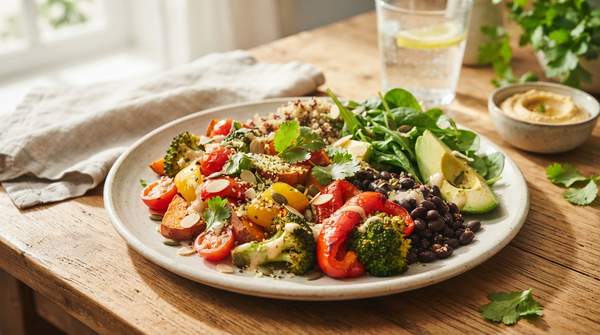
| Fat-soluble vitamins and carotenoids (in green, orange, red, and yellow produce) | Unsaturated fats | Fats are needed to absorb these nutrients from vegetables and fruits | Leafy-green salad with nuts, seeds, avocado, and an olive oil–based dressing |
| Vitamin D | Magnesium | Magnesium plays a key role in vitamin D metabolism and in regulating blood levels of vitamin D | Mixing and matching foods rich in vitamin D and magnesium sources like almonds, pumpkin seeds, chia and hemp seeds, black beans, and dark leafy greens |
| Whole foods generally | Whole-food matrix | Nutrients, fiber, and bioactive compounds interact during digestion in ways isolated supplements cannot replicate | Varied whole-food meals rather than single-nutrient pills |
One pairing that circulates in vegan nutrition advice deserves a note of caution: zinc and sulfur. A vegan dietitian quoted by CNBC says zinc—found in grains, seeds, and legumes like chickpeas—"can be better absorbed when paired with sulfur," but no mechanism for enhanced absorption was provided in the reporting, so it is best treated as advice to watch rather than settled science.
Boosting Iron Absorption with Vitamin C
Iron deficiency is a significant concern for people on plant-based diets, according to dietitian Perez, whose advice was reported by CNBC. The reason is the form of the iron itself: plant foods provide non-heme iron, which the body takes up less readily than the heme iron in animal products. Pairing those plant iron sources with something high in vitamin C makes them more absorbable, she says.
The practical application is simple. A burrito with beans—high in iron—topped with diced bell peppers, which carry a healthy serving of vitamin C, delivers both nutrients in a single meal. The same logic applies to any combination of legumes, grains, or dark leafy greens alongside citrus, peppers, tomatoes, or other vitamin C–rich produce. Because this is general nutritional guidance and individual needs vary, anyone with suspected deficiency should speak with a healthcare provider.
Optimizing Fat-Soluble Vitamin Uptake with Healthy Fats
Plant foods deliver several nutrients that need fat to be absorbed properly: the carotenoids in orange, red, and yellow fruits and vegetables, plus vitamins E and K, with vitamin E also found in avocados, nuts, and seeds. Stanford Lifestyle Medicine advises combining these foods with an unsaturated fat source such as olive oil.
"Making a salad with various leafy greens and vegetables, topped with nuts, seeds, avocados, and an olive oil-based dressing, is the perfect side dish to add to your lunch to keep your heart healthy," says Dr. Makowski in that same guidance. The site also points to studies showing beneficial effects of olive oil and avocado oil on heart health. Relatedly, magnesium plays a key role in vitamin D metabolism and regulating blood vitamin D levels—good sources include almonds, pumpkin seeds, chia and hemp seeds, black beans, and dark leafy greens—and some research suggests prunes may help preserve hip bone mineral density.
This is general nutritional information covering common pairings, not an exhaustive list of synergistic interactions, and it does not extend to mixed or non-plant-based diets.
Empowering Your Plant-Based Journey
The practical decision is to integrate synergistic food pairings into daily plant-based meals to optimize nutrient absorption. Start by auditing what you already eat: if lentils, greens, or grain bowls appear regularly, add a vitamin C–rich partner to them, and dress your vegetable-heavy meals with an unsaturated oil. To check that the approach is working, track your meals for a week and note how often each pairing appears—if beans and peppers or dressed salads show up most days, you have built the synergy into your routine. Anyone with persistent fatigue, suspected deficiencies, or a health condition should treat this guidance as background and seek personalized medical advice.
Sources
- Nutrient synergy: definition, evidence, and future directions - PMC
- Food synergy: an operational concept for understanding nutrition1 - PMC
- Food Synergy Explained: How Nutrients Work Together to Influence Health — News-Medical
- 4 essential food pairings for optimal nutrient absorption, from a vegan dietitian — CNBC
- Food Combinations for Heart, Bone, and Brain Health — Lifestylemedicine