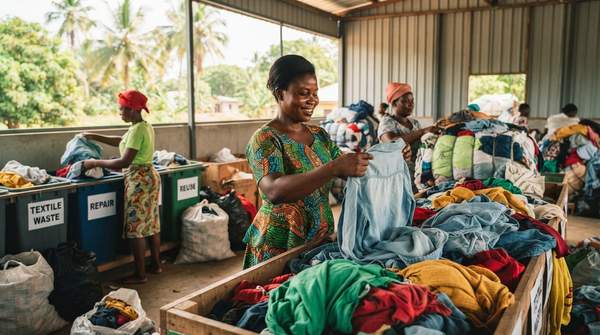
A group of major global fashion brands, including Adidas, H&M Group, and Zara-owner Inditex, have launched the Apparel Recovery Coalition (ARC), a new initiative aimed at tackling the environmental and social challenges of post-consumer textile waste. The coalition, which also includes the Danish company Bestseller, will operate for an initial two-year period to develop and test a "producer responsibility" system designed to manage and create value from the massive flow of secondhand clothing exported to countries in the Global South.
The initiative was established in collaboration with key non-profit partners, The Or Foundation and Circle Economy, signaling a joint effort between industry leaders and on-the-ground experts. The coalition's central goal is to explore how brands can take greater responsibility for their products' end-of-life, funding circular pathways and improving waste management in the very regions most affected by textile exports.
How the Producer Responsibility Model Aims to Function
At the core of the Apparel Recovery Coalition's strategy is the concept of producer responsibility, a framework that holds brands accountable for the entire lifecycle of their products. The coalition plans to test a business model where brand contributions are directly linked to practical outcomes in countries that receive large volumes of secondhand apparel. According to the Apparel Recovery Coalition, its vision is to support systems where textiles are re-used or recycled while reducing environmental impact and reflecting the role of local communities. The proposed model operates through several interconnected stages.
Brand Responsibility and Funding
Under this framework, brands contribute financially to a system that manages their products after consumers are done with them. The coalition aims to explore how these contributions can "better reflect post-consumer textile flows," turning funding into tangible support for waste management and circularity.
Managing Post-Consumer Textile Flows
The model directly addresses the export of used clothing, which often overwhelms local infrastructure in receiving countries. By creating a formal system, the coalition intends to improve transparency and develop scalable infrastructure to handle these materials responsibly, reducing reliance on landfills or burning.
Developing Circular Pathways
The funding is intended to support a range of circular solutions. This includes boosting existing practices like reuse and repair, while also developing new pathways for upcycling and recycling textiles that cannot be resold. The goal is to create a more sustainable ecosystem for post-consumer garments.
Inclusive Governance and Community Input
A key aim of the coalition is to embed community perspectives into its projects and goals. By "testing more inclusive approaches to governance," the ARC plans to ensure that local stakeholders in receiving countries play a role in designing and implementing solutions that directly affect them.
Key Players Driving the Initiative
The Apparel Recovery Coalition brings together some of the largest names in fast fashion and sportswear with non-profits that possess deep expertise in circularity and textile waste. The founding brands are Adidas, H&M Group, Inditex (owner of Zara), and Bestseller. Their involvement signifies a major industry acknowledgment of the waste problem associated with their products.
Crucially, the brands are partnering with The Or Foundation, a Ghana-based non-profit that has spent 15 years developing Ghana's circular textile ecosystem. This partnership provides the coalition with essential on-the-ground knowledge of the social and environmental impacts of the secondhand clothing trade. The coalition is also backed by Circle Economy, a non-profit focused on circularity, which will provide additional support and expertise.
Addressing the Global Textile Waste Challenge
The formation of the ARC comes at a critical time for the fashion industry. According to a report from Cyclomer, the industry is facing "unprecedented pressure over its waste footprint." As international governments tighten regulations on waste exports and set more ambitious circular economy targets, brands are being compelled to take greater responsibility for what happens to their clothing after it is sold. This initiative represents a proactive step by major brands to develop a scalable system for managing their products' end-of-life, rather than waiting for regulations to force their hand.
Ghana: A Crucial Starting Point for Circularity
The coalition was strategically unveiled at Kantamanto Market in Accra, Ghana, one of the world's largest hubs for secondhand clothing. This location was chosen because it provides a vital lens for understanding the realities of post-consumer textiles. Kantamanto is a center for sustainable practices like reuse, repair, and recycling, but it also faces immense challenges from the sheer volume of unwearable garments that end up as waste, contributing to water and soil pollution.
By launching in Ghana and partnering with The Or Foundation, the ARC aims to build upon the existing circular ecosystem and learn directly from the community at the forefront of the global textile waste crisis. This approach is intended to ensure that the solutions developed are practical and address the real-world impacts of the industry.
Monitoring the Coalition's Impact on Textile Waste
Readers should monitor the Apparel Recovery Coalition's progress over its initial two-year testing period to assess the practical implementation and effectiveness of its producer responsibility model. The coalition's plan to develop and test a business model during this time sets a clear timeline for initial action. The success of this initiative could signal a significant shift in how the global fashion industry manages its environmental footprint, moving from vague commitments to a funded, operational system for handling textile waste.
The measurable indicator of the coalition's progress will be the publication of initial findings or reports from the ARC detailing the outcomes of its pilot programs in Ghana and other receiving countries.
Sources
- Apparel Recovery Coalition - Homepage
- Esgdive
- Apparel Recovery Coalition targets textile waste from global clothing exports — TexSPACE Today
- Adidas, H&M, Inditex And BESTSELLER Launch Apparel Recovery Coalition - Textile Insights — Textile Insights - Delivering Inspiring Information
- Global fashion brands launch Apparel Recovery Coalition to tackle textile waste — Cyclomer
- Major fashion brands launch coalition to tackle textile waste, boost circularity — Yahoo News