What Are Sustainable Healthy Living Routines and Strategies?

Individuals who consistently adopted five specific low-risk lifestyle factors lived up to 14 years longer than those who embraced none, according to The Nutrition Source .

LF
Lauren Fisk

April 23, 2026 · 6 min read

A split image depicting a person gardening and meditating, symbolizing the connection between sustainable practices and personal wellness for a longer, healthier life.

Individuals who consistently adopted five specific low-risk lifestyle factors lived up to 14 years longer than those who embraced none, according to The Nutrition Source. A significant extension in lifespan, often disease-free, demonstrates the substantial personal return on investment in daily habits. Imagine gaining an extra decade or more of vibrant, healthy living, free from chronic illnesses, simply by making thoughtful, consistent choices. These choices for sustainable healthy living routines offer direct, tangible benefits.

Many perceive environmental sustainability and personal health as distinct challenges, often viewing ecological action as a sacrifice. However, the most impactful individual behaviors for one are frequently identical for the other, creating a false separation in public discourse. This misconception prevents a unified, powerful approach to interconnected global issues.

Promoting integrated sustainable healthy living routines offers a uniquely powerful and accessible pathway to address both public health crises and climate change simultaneously. These routines, vital for 2026 and beyond, provide a practical strategy for optimizing personal well-being while making a substantial positive impact on planetary health. Your everyday decisions hold a dual power to reshape your future and the environment's.

What is Sustainable Healthy Living?

Sustainable healthy living is not merely a concept; it is an integrated field of study gaining prominence as global challenges converge. A scoping review rigorously sought to locate, categorize, and interpret scientific studies focused on interventions modifying individual behaviors for personal health and environmental sustainability, according to PubMed. A comprehensive review establishes a formal, evidence-based framework for understanding the significant interconnectedness of these seemingly disparate areas.

The same study identified 16 relevant studies across four key topical areas: active transportation, dietary intake, indoor air quality, and green space immersion. These categories vividly demonstrate how everyday choices, from how you commute to what you eat and even your immediate surroundings, contribute significantly to both your personal well-being and the planet's health. The research framework firmly establishes sustainable healthy living as a recognized, multi-faceted approach to well-being that bridges personal and planetary health, offering practical strategies for 2026.

The Core Habits for a Longer, Healthier Life

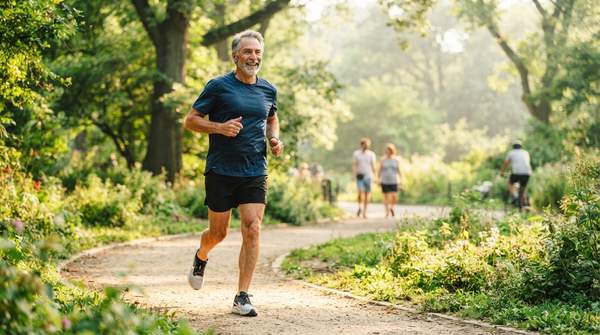
Researchers identified five low-risk lifestyle factors that greatly impact longevity and disease prevention, according to The Nutrition Source. These include maintaining a healthy diet, engaging in at least 30 minutes daily of moderate to vigorous physical activity, achieving a healthy weight (defined as a Body Mass Index between 18.5-24.9), abstaining completely from smoking, and consuming alcohol in moderation (up to 1 drink daily for women, up to 2 daily for men). These are not extreme measures, but rather accessible, actionable steps for anyone seeking to implement sustainable healthy living routines.

The impact of consistently adopting these habits is truly remarkable, extending far beyond simple longevity. Women at age 50 who practiced four or five of these healthy habits lived approximately 34 more years free of diabetes, cardiovascular diseases, and cancer. For men of the same age following four or five healthy habits, this meant gaining about 31 years free of chronic disease. Striking data shows that adopting these five straightforward habits offers a substantial return on investment in terms of extended, high-quality, disease-free years for both men and women, challenging the notion that environmental action requires personal sacrifice.

Eating for the Planet and Your Plate

Dietary choices represent a critical nexus where personal health and environmental sustainability significantly converge. The over-consumption of carbon-intensive, high-calorie foodstuffs contributes directly to both climate change and the escalating epidemics of obesity, diabetes, and cardiovascular disease, as comprehensively reported by PMC. The undeniable dual impact makes strategic dietary shifts a singularly powerful solution for addressing both global crises simultaneously.

Transitioning from diets high in meat and dairy to largely plant-based diets is not only a necessary step for climate change mitigation but also leads to substantive reductions in human morbidity and mortality, according to PMC. The evidence from PMC clearly demonstrates that adopting a largely plant-based diet isn't just a personal health choice; it's a critical, dual-purpose intervention that simultaneously slashes chronic disease rates and significantly mitigates climate change, making it a non-negotiable for future public health and environmental policy in 2026.

Indeed, unhealthy eating patterns may be the single greatest behavioral contributor towards human morbidity and mortality. These patterns are estimated to cause more harm than unsafe sex, alcohol, tobacco, and other drugs combined, according to PMC. The stark statistic shows diet's unparalleled impact on both personal health and, by extension, the health of the environment. Shifting towards plant-based diets is therefore not just an environmental imperative but a powerful, accessible strategy to combat the leading causes of human disease and mortality.

Beyond Diet: Everyday Actions with Dual Impact

Sustainable healthy living extends beyond dietary choices to encompass various everyday actions that collectively make a significant difference. Conserving energy at home, for instance, by simply turning off lights when leaving a room or ensuring proper insulation, can lead to substantial energy savings, according to Carbon Collective. Seemingly small, simple practices not only reduce your environmental footprint but often result in tangible financial savings, further demonstrating the practical benefits of sustainable living routines.

Actions reinforce the core idea that individual behaviors for drastically extending disease-free life are not merely beneficial for the planet. Instead, they are potent, often overlooked levers for climate change mitigation, directly challenging the perception that environmental action requires sacrifice. Simple household practices like energy conservation demonstrate that sustainable living extends to all facets of daily life, offering tangible environmental benefits that align perfectly with personal well-being goals.

Your Questions About Sustainable Living, Answered

What are the benefits of sustainable healthy living?

Sustainable healthy living offers benefits beyond extending physical lifespan and mitigating climate change. It also contributes significantly to mental well-being and fosters stronger community connections. Engaging in active transportation, such as walking or cycling, not only reduces carbon emissions but also provides opportunities for outdoor activity and social interaction, which can improve mood, reduce stress, and enhance overall life satisfaction.

How can I make my lifestyle more sustainable?

You can make your lifestyle more sustainable by focusing on intentional choices within your daily routines. Incorporate active transportation by walking or cycling for nearby errands, thereby reducing your reliance on fossil fuel vehicles and increasing your physical activity. Seek out and utilize local green spaces, parks, or nature trails for exercise and relaxation, which can enhance well-being and foster a deeper connection to your local environment. These practices blend personal health with environmental stewardship seamlessly.

What are some simple sustainable habits?

Adopting simple, consistent habits related to conscious consumption and waste reduction can significantly contribute to sustainable healthy living. For instance, always carrying reusable water bottles and coffee cups drastically cuts down on single-use plastics. Planning your meals effectively to minimize food waste also conserves resources and saves money. Such small, consistent actions, when widely adopted, collectively create a larger positive impact on both personal health and planetary resources in 2026.

The Bottom Line: A Healthier You, A Healthier Planet

The evidence consistently demonstrates that individual behaviors for drastically extending disease-free life are not merely beneficial for the planet. These actions are, in fact, potent and often overlooked levers for climate change mitigation, fundamentally challenging the widespread perception that environmental action requires personal sacrifice. The integrated approach of sustainable healthy living routines offers a clear, accessible, and powerful path forward for 2026 and beyond.

Individuals who embrace a handful of low-risk lifestyle factors, as highlighted by The Nutrition Source, are not just living longer; they are gaining decades of disease-free life. The substantial return on investment in personal well-being far outweighs any perceived inconvenience of adopting sustainable living practices. It represents a win-win scenario for both the individual and the global environment.

Policymakers and public health campaigns that continue to treat personal health and environmental sustainability as separate issues miss a crucial opportunity for integrated solutions.tainability as separate issues are missing the most powerful, synergistic lever available. This oversight effectively leaves decades of healthy life and significant climate mitigation on the table. By 2026, a concerted effort to integrate these strategies could significantly improve public health outcomes, reduce carbon footprints across communities, and foster a more resilient future for everyone.