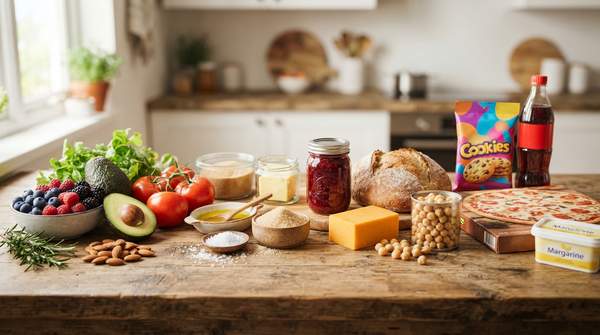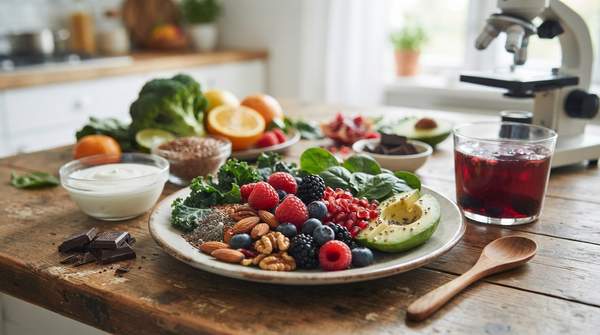
"Clean eating" has no scientific definition, and that is the single most important fact about it. Experts generally use the phrase to mean prioritizing whole, minimally processed foods, but because no formal definition exists, the term invites wildly different interpretations—including rigid ones that eliminate entire food groups and, in extreme cases, can contribute to disordered eating. The health benefits come from what the approach adds to your plate; the risks come from what a perfectionist reading of the label removes.
What is 'Clean Eating' (and What It Isn't)
Across health institutions and nutrition writers, a consistent core meaning emerges: clean eating is a dietary philosophy that promotes whole, minimally processed foods, eaten as close to their natural state as possible—fruits, vegetables, whole grains, lean proteins, nuts, and seeds. Harvard Health, which has examined both the good and the bad of the trend, describes the constructive version as simply eating more whole and minimally processed foods.
What clean eating is not is a clinically defined diet. A science-oriented explainer from ZOE, written by Nicky Hornzee, notes that while the term has been popular for roughly a decade, it has no scientific definition and generally means "diligently avoiding anything processed and instead filling your plate with 'whole' or 'real' foods." That vagueness is where trouble starts: Harvard Health observes that some interpretations become "less of a diet than an identity."
Research on how the term is actually perceived underscores the ambiguity. A study of U.S. adolescents and emerging adults published in PMC found participants split on whether the approach is healthy, unhealthy, or both, with roughly 8.6 percent of open-ended responses describing it as harmful specifically because of restrictive behavior. As one participant put it, "It can be good for your general health, but when taken too far it can become dangerous."
Core Principles for Mindful Food Choices
The practical principles that most serious sources share are modest. First, choose foods in or near their natural state. Mayo Clinic Health System frames the goal as consuming nutrient-rich foods "directly from the earth that have not been overly processed," in contrast to a typical American diet heavy in heavily processed products built from synthetic ingredients and loaded with fat, sugar, sodium, preservatives, and additives.
Second, minimize heavy processing—foods with artificial additives, preservatives, and added sugars. This principle aims to reduce intake of synthetic additives and unhealthy fats, not to declare all processing forbidden. Third, make conscious choices about ingredients and cooking methods. Mayo Clinic Health System suggests preparing meals from scratch so you control what goes into them; a widely repeated rule of thumb is to shop the outer walls of the grocery store, where fresh foods are usually stocked.
Note what is absent from these principles: any mandate to cut specific foods, ban food groups, or treat certain ingredients as morally tainted. Notably, one guide by health and fitness expert Chris Freytag explicitly frames clean eating "not as a restrictive diet but as a sustainable lifestyle choice." The label describes a pattern of emphasis, not a rulebook.
The Evidence-Backed Benefits of Whole Foods
The benefits attributed to a whole-foods-focused pattern are substantial. Mayo Clinic Health System reports that foods in their natural state supply plentiful vitamins and minerals, high-quality protein, and healthy fats, which improve heart and brain health, assist with weight management, build a stronger immune system, and increase energy levels. Foods in their natural state also tend to be more flavorful, which makes the pattern easier to sustain than it may first appear.
An important qualification: these benefits attach to the underlying pattern—nutrient-dense, minimally processed foods—not to the "clean eating" label itself. A general overview of the approach similarly connects whole-food emphasis with overall health, weight management, and well-being. If a version of "clean eating" removes nutritious foods from your diet rather than adding them, the evidence for benefit no longer applies to it.
That distinction matters because most people eating a standard processed-heavy diet have genuine room to shift toward whole foods. The improvement is additive and gradual: more produce, more intact grains, more lean protein, fewer products engineered for long shelf life. It does not require purity.
Navigating the Pitfalls: Risks of Extreme 'Clean Eating'
The risks of the trend are specific to its extreme interpretations, and they are documented by credible sources. Harvard Health is direct about the downside: "Other interpretations of clean eating can lead to a rigid diet that bans entire foods or food groups like grains—especially gluten-containing grains—soy, legumes, and dairy. These extremes are not supported by research, and you can develop nutrient deficiencies if your food choices are too limited."
When eliminating grains, dairy, soy, or legumes, nutrients those groups normally supply can fall short. And the danger is not only nutritional. Harvard Health warns that rigid forms of clean eating "can become less of a diet than an identity and could lead to disordered eating." ZOE's explainer makes the same observation about how the trend is promoted: advocates "are often quick to demonize certain foods and encourage you to cut out specific foods or food groups," with sugar, grains, gluten, and dairy as frequent targets.
The perception study adds a psychological dimension. Its participants flagged that the approach "encourages restrictive eating and cutting out food groups, two harmful practices that can lead to eating disorders," while others worried about rigidity itself. A dietary philosophy can also invite perfectionism—an all-or-nothing mindset in which any deviation feels like failure. As one overview of the approach puts it, balance is key, and occasional indulgences are acceptable within a healthy lifestyle.
Harvard Health distills the whole picture into one sentence: "There's real benefit in eating more whole and minimally processed foods, but not in fearing others that are nutritious."
Your 'Clean Eating' Decision Framework
Use this matrix to evaluate food choices and eating habits. It maps each core principle to its healthy application, the pitfall it can slide into, and the balanced approach that captures the benefit without the harm. The reasoning is straightforward: the benefits of clean eating come from adding whole foods and reducing heavily processed ones; the harms come from rigid rules and unnecessary elimination—so the framework rewards the former and flags the latter.
| Core Principle | Practical Application | Potential Pitfall | Balanced Approach |
|---|---|---|---|
| Prioritize foods in their natural or minimally processed state, reducing synthetic additives and unhealthy fats. | Focus on fresh fruits, vegetables, lean proteins, and whole grains; prepare meals from scratch when you can. | Eliminating entire food groups—grains (including gluten-containing grains), soy, legumes, or dairy—restrictions Harvard Health says are not supported by research and can cause nutrient deficiencies. | Prioritize whole, unprocessed foods while allowing occasional, moderately processed options without fear or guilt. |
| Treat clean eating as a flexible lifestyle, not a rigid diet—it has no formal definition. | Make conscious choices about ingredients and cooking methods meal by meal. | An all-or-nothing mindset that can lead to disordered eating or orthorexia, plus social isolation and psychological stress around food. | Focus on your overall dietary pattern and nutrient density; recognize occasional indulgences as part of a healthy lifestyle. |
Read the table as a series of checks rather than a scoring system. When considering a food choice, ask first whether it moves you toward whole foods; then ask whether any rule you are applying—especially one that bans a food group—has a basis other than fear. If a "clean" rule is narrowing your variety, your social life, or your peace of mind, the framework points you back to the balanced column.
Embracing a Balanced Approach to 'Clean Eating'
Adopt 'clean eating' as a flexible principle focused on whole, minimally processed foods, actively monitoring for signs of rigidity or food-related anxiety. You do not need the label; you need the pattern—more nutrient-dense foods, fewer heavily processed ones, and no banned food groups.
The measure of success is not purity but sustainability. The measurable indicator is a sustained pattern of diverse food choices, absence of guilt around occasional treats, and a healthy relationship with food that supports overall well-being. If your food choices become narrower over time, or if guilt, fear, or social avoidance start appearing around meals, those are the warning signs the evidence identifies—and a signal to loosen the rules rather than tighten them.
Sources
- What Is Clean Eating, and Is It Healthy? — ZOE
- “It’s Healthy Because It’s Natural.” Perceptions of “Clean” Eating among U.S. Adolescents and Emerging Adults - PMC
- Chris Freytag Clean Eating Guide — oregoned.org
- Clean eating: What does that mean? — Mayo Clinic Health System
- What Is Clean Eating & Is It Good For My Body? — Careteamplus
- Clean eating: The good and the bad - Harvard Health
- Clean Eating: A Guide to Nourishing Your Body — OMICS International