Postbiotics are the beneficial compounds that live gut bacteria produce when they digest food — the functional end-products of microbial activity rather than another living supplement. They include substances such as short-chain fatty acids, enzymes, cell wall fragments, bacterial lysates, and other metabolites like vitamins and amino acids. Because they are not alive, they deliver gut-health benefits without the risks that can accompany administering live microorganisms, which is why researchers increasingly view them as a promising option for people whose immune systems are compromised.
What Are Postbiotics?
Postbiotics are the active substances that probiotics produce during their growth and metabolism, and they contribute to gut health directly rather than by colonizing the gut. A scientific review of probiotics, prebiotics, and postbiotics published in the National Library of Medicine's journal database describes them as "the health-conferring substances that probiotics produce when they metabolize dietary components," and notes that postbiotics represent the newest field of study among the three categories.
The term covers a broad chemical family. Healthline's dietitian-authored overview lists short-chain fatty acids, exopolysaccharides, enzymes, cell wall fragments, bacterial lysates, cell-free supernatants, and various metabolites including vitamins and amino acids among the compounds classified as postbiotics. What unites them is not their chemistry but their origin: each is produced by live microorganisms and then delivered to the gut in an inanimate form.
Postbiotics contribute to the homeostasis of the intestinal microbiota and help alleviate host diseases, according to the same review. In other words, they are not merely waste products of fermentation — they are part of the mechanism by which a balanced microbiome supports the body's overall equilibrium.
The Biotic Ecosystem: Fuel, Factories, and Products
The clearest way to understand the three "biotics" is as a sequential production process inside the gut. Prebiotics are the fuel, probiotics are the factories, and postbiotics are the products. Each stage depends on the one before it.
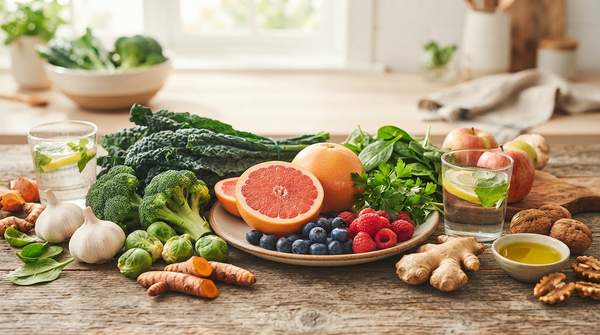
- Prebiotics arrive as fuel. Prebiotics are nondigestible substances, typically dietary fibers, that reach the colon intact. The International Scientific Association for Probiotics and Prebiotics (ISAPP) recognizes them as dietary components selectively utilized by beneficial host microorganisms, conferring a health benefit. Common types include inulin, fructooligosaccharides (FOS), galactooligosaccharides (GOS), and lactulose, found in foods such as whole grains, onions, garlic, and bananas.
- Probiotics metabolize that fuel. Probiotics are live microorganisms that confer a health benefit when administered in adequate amounts. They are often consumed in fermented foods or dietary supplements. In the colon, they ferment the prebiotic fibers — essentially serving as "food" for beneficial bacteria, helping increase their numbers and promote a healthier microbiome.
- Postbiotics are the output. When probiotics metabolize those dietary components, the compounds they release — short-chain fatty acids, enzymes, peptides, and other metabolites — are the postbiotics. These inanimate substances then act on the gut and the host directly.
The practical takeaway from this sequence is that postbiotics are not just another separate supplement category. They are the end products of the interaction between prebiotics and probiotics, which means a diet that supports the earlier stages of the process also supports postbiotic production.
Key Health Benefits of Postbiotics
Research on postbiotics is newer than research on prebiotics and probiotics, but the benefits identified so far cluster around three connected effects. A review of the health benefits of prebiotics, probiotics, synbiotics, and postbiotics reports that postbiotics demonstrate anti-inflammatory effects, aiding in managing illnesses such as colitis and alleviating gastrointestinal discomfort. The same review notes antioxidant activity that mitigates oxidative stress, particularly relevant to diabetes and metabolic disorders.
Reporting by Vijay Kumar Malesu for News-Medical, drawing on the scientific literature, describes postbiotics as modulating immune responses and enhancing gut barrier integrity alongside their anti-inflammatory effects. UCLA Health's summary of emerging research adds that initial findings suggest postbiotics may play a role in maintaining a balanced and robust immune system, supporting digestive health, helping manage the gut microbiome, and possibly improving the regulation of blood sugar levels.
These findings remain early-stage — the UCLA Health article explicitly frames them as what researchers "came to suspect" and what findings "suggest" — but the direction of the evidence is consistent across sources: the compounds that probiotics leave behind are themselves biologically active.
Safety Advantages for Vulnerable Populations
The most distinctive argument for postbiotics is their safety profile. Because they are inanimate, they avoid the risks associated with administering live microorganisms — a meaningful difference for people whose immune systems cannot easily manage introduced microbes.
A paper in npj Science of Food, authored by Said Dahmouni and colleagues and published by Nature, makes this case directly for the closely related category of paraprobiotics (inactivated microbial cells). The authors write that the improved safety and formulation predictability of these preparations make them particularly suitable for vulnerable populations — infants, older adults, and immunocompromised or critically ill individuals — "for whom the use of live probiotics may raise disproportionate risk despite potential benefits." The paper also notes that their metabolic inertness enhances reproducibility in food and clinical applications, supporting their use where safety margins must be tightly controlled.
For immunocompromised individuals in particular, News-Medical's reporting highlights that postbiotics offer their benefits "without the risks associated with administering live microorganisms." This is the core trade-off: live probiotics may colonize and act within the gut, but they also carry a small potential for infection in people with weakened defenses; postbiotics cannot colonize anything.
Distinguishing the 'Biotics': A Comparative Overview
The three categories are easiest to hold apart when compared side by side, using the fuel-factory-product model:
| Category | What it is | State | Role in the gut | Common sources |
|---|---|---|---|---|
| Prebiotics | Nondigestible dietary fibers, selectively fermented by beneficial microbes | Non-living | Fuel: promote growth and activity of beneficial bacteria | Whole grains, onions, garlic, bananas; inulin, FOS, GOS, lactulose |
| Probiotics | Live microorganisms that confer a health benefit in adequate amounts | Living | Factories: ferment prebiotics and produce beneficial compounds | Fermented foods, dietary supplements |
| Postbiotics | Active substances produced by probiotics — SCFAs, enzymes, peptides, cell fragments, metabolites | Non-living | Products: modulate immunity, support gut barrier, reduce inflammation | End products of probiotic metabolism; some heat-killed preparations and fermented formulas |
One further distinction is worth noting. Kazuya Mitsuhashi, an R&D manager at chemicals manufacturer Daicel Corporation, explained in Nature that microbial composition varies with factors such as gender, age, eating habits, and stress levels — so a person may not have the right microbial profile to benefit from probiotics or prebiotics. "Postbiotics are about delivering compounds to the gut without being affected by the presence or absence of a particular microbe," he said. Where probiotics and prebiotics depend on the existing gut ecosystem, postbiotics do not.
Making Informed Choices for Gut Health
For a reader deciding how to support gut health, the evidence supports considering postbiotics as a beneficial and potentially safer option, especially where live probiotics pose concerns. Postbiotic supplements remain less widely available than prebiotic and probiotic products because the category is newer, and commercialization faces regulatory hurdles stemming from inconsistent definitions and complex classification between dietary supplements and medicinal products, as News-Medical's reporting notes.
The practical route for most people, however, runs through the whole ecosystem rather than a single product. Since postbiotics are the end products of probiotics metabolizing prebiotics, you can increase the postbiotics in your body by eating more prebiotic foods and probiotics — the approach Healthline describes. UCLA Health's guidance points the same direction: add fermented foods to your diet, along with the fresh fruits, vegetables, and leafy greens that feed the trillions of microbes already in your gut.
In practice, that means looking for products or dietary patterns that support the entire biotic ecosystem — fiber-rich plants as fuel, fermented foods as factories — and recognizing postbiotics as the key functional components those choices produce. This article does not constitute medical advice, and anyone who is immunocompromised or managing a condition such as colitis should discuss gut-health choices with a clinician before starting any supplement.
Sources
- Probiotics, prebiotics, and postbiotics in health and disease - PMC
- The Rise of Postbiotics for Gut Health — News-Medical
- What Are Postbiotics? Types, Benefits, and Downsides — Healthline
- Health Benefits of Prebiotics, Probiotics, Synbiotics, and Postbiotics - PMC
- New research shows benefits of postbiotics — Uclahealth
- Postbiotics and paraprobiotics in food biochemistry mechanisms stability and nutritional applications -… — Nature
- Postbiotics: an emerging option for gut health — NATURE