Postbiotics
5 articles
Prebiotics Feed, Probiiotics Live, Postbiotics Result: How the Three 'Biotics' Actually Work
Prebiotics, probiotics, and postbiotics are distinct but interconnected components of gut health. Understanding their roles—prebiotics as food, probiotics as live microbes, and postbiotics as their beneficial byproducts—guides a food-first approach to nourishing your gut.
Postbiotics: The Microbial Byproducts That Make Fermented Foods Work Even Without Live Cultures
Postbiotics are the compounds microbes leave behind, including soluble byproducts and inactivated cell fragments, which deliver health benefits even in fermented foods that have undergone pasteurization or baking. These microbial byproducts support gut barrier function, modulate immunity, and inhibit pathogens, offering health advantages independent of live cultures.
Postbiotics Explained: The Non-Living Compounds Your Gut Bacteria Make for You
Postbiotics are beneficial, non-living compounds produced by gut bacteria when they digest food, offering health benefits without the risks associated with live probiotics. They represent the end-products of microbial activity, contributing to gut health, immune modulation, and reduced inflammation, making them a promising option, particularly for vulnerable populations.
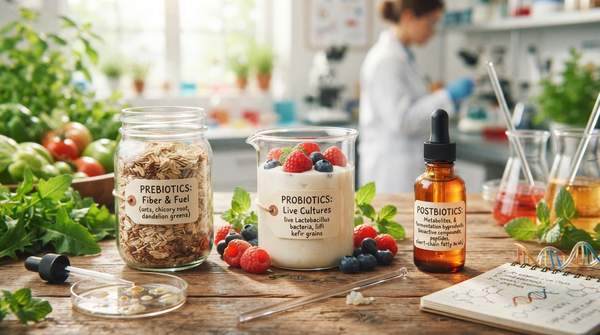
What Are Postbiotics? The Scientific Definition, and How They Differ From Prebiotics and Probiotics
Postbiotics are defined as inanimate microorganisms or their components that confer a health benefit on the host, differentiating them from live probiotics and prebiotic food sources. The ISAPP consensus definition clarifies their distinct role in wellness.
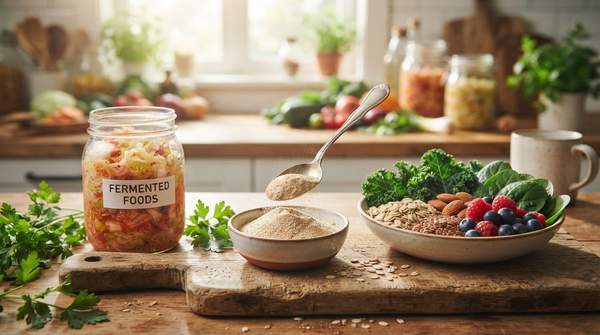
Postbiotics: A Distinct Approach to Gut Health Compared to Prebiotics and Probiotics
Postbiotics are beneficial compounds derived from microorganisms, offering a distinct approach to gut health by providing inactive microbial components and metabolites. Unlike prebiotics and probiotics, they deliver health benefits without introducing live cultures, focusing on strengthening the gut barrier and reducing inflammation.