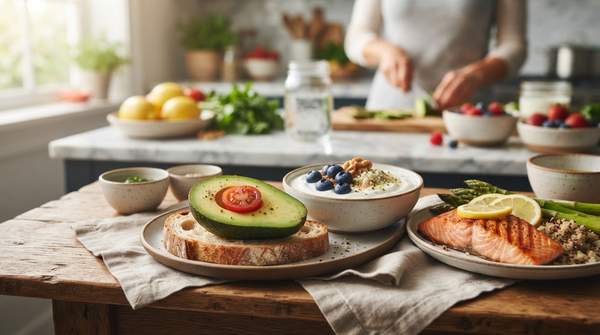
The nutrients listed on a food label are only part of the story; what truly matters is how much of that nutrition your body can actually absorb and use. The concept of nutrient synergy explains how certain foods, when eaten together, can have a greater physiological impact than when consumed alone. This principle moves beyond focusing on single nutrients and instead looks at the powerful interactions that happen on your plate. At the heart of this idea is bioavailability—the measure of how easily your body can absorb a nutrient. By understanding and applying a few simple food pairings, you can naturally enhance the bioavailability of key vitamins and minerals, unlocking more of their health benefits without a complete dietary overhaul.
The Science Behind Nutrient Synergy
Nutrient synergy is the process where two or more nutrients work together to produce a combined effect greater than the sum of their individual parts. This isn't a random phenomenon but a series of specific biochemical interactions that can significantly improve your nutritional intake. One of the most common mechanisms involves one nutrient converting another into a more accessible form. A well-known example, noted in an article by Mark Hyman, MD, is the relationship between vitamin C and plant-based iron. This type of iron, known as non-heme iron, is not as easily absorbed as the iron found in meat. Vitamin C acts as a catalyst, changing the iron into a form your body can more readily use, thereby boosting its bioavailability and helping to support energy levels.
Another key mechanism involves the role of dietary fats in absorbing certain vitamins and antioxidants. Nutrients classified as "fat-soluble," such as lycopene, require the presence of fat to be transported from your digestive system into your bloodstream. Lycopene is a powerful antioxidant found in red and pink fruits and vegetables like tomatoes. According to Stanford Lifestyle Medicine, pairing these foods with a source of healthy fat, such as olive oil, is essential for maximizing lycopene's absorption. Without the fat, much of this valuable nutrient would simply pass through your body unutilized.
Finally, some potent compounds are naturally difficult for the body to absorb on their own. Curcumin, the active ingredient in turmeric, is celebrated for its strong anti-inflammatory properties. However, an article from Harvard Health explains that it is very poorly absorbed in the gut. This is where piperine, a compound found in black pepper, comes in. Piperine acts as a bio-enhancer, dramatically increasing the body's ability to absorb curcumin. This synergistic pairing is crucial for unlocking the antioxidant's full potential, making the combination of turmeric and black pepper a classic example of how a simple spice can amplify the benefits of another.