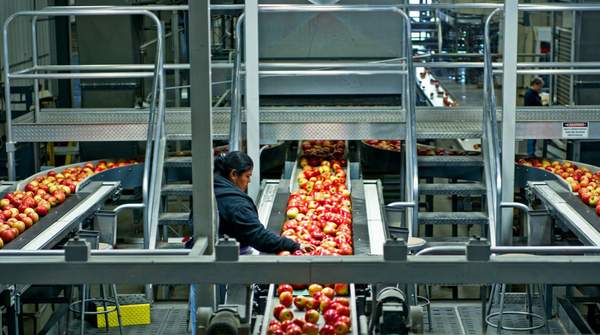
UK food manufacturers face the challenge of lost production capacity despite having existing equipment in place. These hidden losses create severe margin pressure, highlighting the need to identify root causes before making new capital investments. While manufacturing outpaced the UK economy's productivity growth for a decade, official statistics show a recent decrease in manufacturing output per hour, with ONS data highlighting persistent operational friction across the sector. Navigating these shifts requires identifying structural constraints on the plant floor. A hands-on, engineering-led partner like Total Productivity Solutions works directly on site to restore output, protect operating margins, and remove performance bottlenecks.
Five Hidden Causes of Lost Factory Capacity
Multiple practical constraints are actively eroding plant floor operations across the UK. Addressing lost factory capacity requires tackling root causes rather than relying on generic capital investment.
- Material Supply Disruptions: Unreliable vendor deliveries, raw material variability, or sub-specification inputs directly starve production lines, causing micro-stops, line idling, and batch scrap.
- Line Imbalance: Unaligned cycle times across processing stations create severe line friction—causing faster, high-capacity machinery to sit idle (starved or blocked) while waiting on slower upstream or downstream operations.
- Extended Changeovers: Unstandardized product switchovers and prolonged post-changeover ramp-ups inflate planned downtime, eroding Overall Equipment Effectiveness (OEE) and overall plant availability.
- Poor Factory Layout: Flawed plant layouts and excessive spatial separation force long material transfer distances and operator cross-traffic, adding hidden handling friction and slowing total throughput.
- Equipment Reliability Issues: While major unplanned downtime halts production, industry production loss analyses confirm that catastrophic mechanical failures account for only
Data-Driven Diagnostics & Margin-Recovery Solutions for UK F&B Plants
Accelerated Digital Transformation & Automation
The transition toward digital plant integration continues to gain momentum. According to Gartner's Digital Twin adoption survey, over 40% of industrial organizations worldwide will be deploying smart plant technologies or actively using digital twins by 2027. These tools are often touted as the ultimate cure for line throughput issues, allowing teams to simulate adjustments before committing capital.
However, throwing automated equipment at a line assumes that machine speed is your primary limitation. In reality, automating a broken process or bad layout simply speeds up the creation of bottlenecks downstream. Market data from Fortune Business Insights shows that large enterprises account for 66.4% of digital twin implementations, using them to avoid costly hardware misalignments.
Before investing in expensive hardware or digital upgrades, manufacturers must identify the true production constraint. Total Productivity Solutions focuses on diagnosing these exact operational bottlenecks first, ensuring capital investment targets the root cause of lost capacity rather than creating isolated islands of automation.
Cutting Utility and Material Waste Through Better Flow
Escalating operational costs require targeted fixes—such as rebalancing thermal loads on cooking vessels, tuning automated wash cycles to curb utility waste, and trimming excess line scrap. Rather than relying on broad sustainability messaging, pragmatic manufacturers cut overhead by streamlining their core processing flow.
Key Engineering Interventions
| Area | Common Floor Bottleneck / Inefficiency | Specific Technical Solution |
| CIP / Cleaning | Static timed wash cycles running over-spec | Install conductivity sensors and optical turbidimeters to end flush cycles the second water clarity targets are met, reducing wash water and chemical usage by 15–25%. |
| Thermal Processing | Unbalanced steam/heating loads on cooking vessels | Install modulated steam control valves and condensate return loops to maintain precise vessel temperatures without over-boiling or thermal cycling loss. |
| Material Handling | High trim, edge, or changeover scrap | Install inline trim re-feed systems, adjust side-guide tolerances on high-speed belts to stop product tumbling, and standardize recipe-driven automated changeovers. |
| Line Layout & Flow | Accumulation zones, line friction, and excess travel | Reroute product conveyors to minimize belt transfers, replace right-angle turns with sweeping curves, and align conveyor VFD speeds to prevent product crashing at machine inlets. |
Plant operations suffer when flawed layouts create unnecessary material movement and line friction. Total Productivity Solutions applies manufacturing optimisation and targeted layout redesign to systematically eliminate energy inefficiency and material waste, directly lowering unit operating costs.
Addressing the Skills Gap with Technology
Workforce shortages remain a persistent pressure across manufacturing hubs. Projections from the FDF indicate that regional sectors, such as Scotland's food and drink industry, will require new recruits equivalent to 36% of their current workforce by 2034.
Mitigating labor constraints relies on boosting operator effectiveness through consistent working methods before replacing manual tasks with technology. Fixing underlying process flow first ensures targeted automation solves real bottlenecks rather than simply automating existing inefficiency. By utilizing structured frameworks like Mission Directed Work Teams, operators and supervisors maintain standard operating procedures while securing long-term operational reliability.
Enhanced Food Safety & Traceability Through Tech
Evolving regulatory expectations and quality standards demand enhanced inline verification. According to Defra, UK manufacturing saw a 0.5 per cent decrease in Total Factor Productivity in 2024 compared to 2023, driving the adoption of automated computer-vision inspection systems and digital tracking across processing environments.
However, simply dropping new hardware onto an existing line often creates unforeseen friction. Poorly designed inspection setups frequently turn into major operational bottlenecks—disrupting smooth product spacing, slowing overall belt speeds, or causing physical accumulation that starves downstream packaging equipment.
Integrating real-time sensor monitoring or inline quality control points requires carefully adapting physical product flows to protect throughput. Total Productivity Solutions applies detailed hygienic design, material handling principles, and process line integration to incorporate verification hardware smoothly.
Because the hygienic design of equipment plays a vital role in controlling microbiological safety and product quality, every inline sensor, camera, and rejection mechanism must be positioned without creating hard-to-clean dead zones or hindering routine washdown access, keeping quality compliance and line performance perfectly aligned.
The Rise of Data-Driven Operational Excellence
Plant managers increasingly rely on empirical floor data rather than high-level estimates to expose root causes. Analyzing actual throughput against theoretical rates, tracking Overall Equipment Effectiveness (OEE), categorizing downtime events, and pairing data with direct shop-floor observation reveals why capacity is lost—whether to minor stoppages, rate reductions, or material spillage.
Crucially, optimizing an individual machine in isolation often masks larger systemic issues. A high-performing machine means little if deficient line integration creates upstream bottlenecks or starves downstream processes. Emphasizing whole-line performance ensures that interactions across every process step are understood.
Through its structured 5D framework—Discover, Define, Design, Develop, and Deliver—Total Productivity Solutions conducts detailed diagnostics examining process flow, equipment performance, labor deployment, layout, material movement, and operating standards to pinpoint the true line constraints before capital is committed.
How Total Productivity Solutions Drives Plant Performance
Total Productivity Solutions (TPS) delivers hands-on engineering expertise to managing directors, plant managers, and operations directors navigating persistent capacity loss, line redesigns, or underperforming capital investments.
Utilizing the 5D framework discussed earlier, the engagement begins with a structured, shop-floor diagnostic that pinpoints true operational bottlenecks before capital is committed. By converting floor-level findings into actionable future-state engineering designs—incorporating 3D CAD layout visualization, precise equipment specification, material flow optimization, and custom line integration—TPS removes technical uncertainty and risk before hardware is ordered. Operating across fresh produce, chilled food, and beverage manufacturing, TPS bridges the gap between site leadership and shop-floor execution by combining practical, on-the-line troubleshooting with turnkey engineering support.
TPS is a good fit when:
- Persistent Capacity Loss & Line Imbalance: A facility suffers from chronic throughput bottlenecks, high scrap rates, or line friction that starves downstream packaging.
- Poor ROI on Existing Capital: Recent equipment investments or automation projects have failed to deliver their target rates or original business case.
- Layout Constraints & Space Limitations: Inefficient factory layouts, tight footprint restrictions, or poor material movement disrupt process flow and inflate unit operating costs.
- Uncertain Capital Investment Decisions: Site leadership needs practical engineering validation, detailed 3D CAD modeling, and independent equipment specifications before committing capital to factory expansions, line redesigns, or automation upgrades.
Why You Must Validate Factory Constraints Before Adding Automation
Plunging straight into modern robotics, digital sensors, or automated lines without verifying actual floor constraints often leads to underperforming capital projects. Manufacturing leaders must validate baseline line friction, layout limitations, and operational realities before committing funds to cobots or digital tools for several critical reasons:
- Exposing the Primary Bottleneck: Installing cobots or high-speed automation upstream of an unaddressed constraint merely accelerates work-in-progress inventory build-up rather than increasing sellable throughput. Validating line balance ensures capital targets the exact point where output is starved or blocked.
- Protecting Capital ROI and Downtime Metrics: High-tech automation upgrades frequently fail to achieve original business cases when introduced into poor material flows. Industry implementation data demonstrates that identifying physical layout restrictions and process flow friction prior to machinery specification prevents costly post-installation downtime and yield loss.
- Maximizing Sensor and Line Integration Yields: Digital sensors and automated equipment only deliver actionable insights when hardware interfaces, operating standards, and operator workflows fully align. Verifying actual floor constraints ensures digital integration yields verifiable improvements in scrap reduction, labor efficiency, and overall operating margins.
Takeaway for UK Food Manufacturers
To deliver real return on capital, manufacturing leaders must step back and adopt a direct, targeted approach: understand what works on the factory floor, identify precisely what limits output, and focus investment on the few improvements that matter most. Plunging into new technology without this clarity only risks amplifying existing bottlenecks. Total Productivity Solutions helps managing directors, plant managers, and operations directors eliminate operational and project uncertainty by pinpointing where lost capacity and shrinking margins truly originate.
As an experienced, engineering-led partner, TPS guides food manufacturers through complex operational improvements and capital project delivery. Real productivity improvement begins by correctly defining the problem. We connect capital decisions to actual site realities, bringing together operators, engineers, planners, and managers to ensure every machinery purchase or layout change drives verifiable margins and maximum throughput.
Frequently Asked Questions
How can manufacturers improve productivity before buying equipment?
To improve productivity before committing to new equipment, UK food manufacturers should first focus on optimizing current line processes, identifying true plant-floor constraints, and strengthening equipment reliability through hands-on engineering strategies. Total Productivity Solutions addresses these exact operational shifts by working directly alongside client teams on the factory floor, driving process design, equipment selection, project delivery, and targeted reliability improvements to yield lasting, tangible results.
How can UK food factories ensure new productivity solutions target root causes rather than symptoms?
Distinguishing true root causes from mere symptoms requires looking beyond surface-level downtime logs. By taking a structured, engineering-led approach, operations teams evaluate key indicators across the line: tracking material flow to reveal hidden bottlenecks, using overall equipment effectiveness (OEE) to separate mechanical failures from speed losses or quality drops, and analyzing actual throughput against design standards. Direct operational observation on the factory floor then grounds this data in physical reality. This ensures teams pinpoint the precise underlying constraints limiting output rather than wasting capital on superficial fixes.
How can food and FMCG manufacturers cale operational improvement projects across complex plant facilities?
Manufacturers should only invest in automation after verifying their site's true physical and operational constraints. Before committing capital, teams must evaluate the realistic operational benefits, line integration challenges, and clear return on investment. TPS helps food and FMCG plants ground these automation decisions in real-world floor data—ensuring technology targets actual bottlenecks rather than automating existing inefficiencies.