Boiling Chinese spicy cabbage creates new compounds like nonanal and linalool, fundamentally altering its flavor without adding a single ingredient. Basic cooking actions initiate profound chemical changes, crafting a dish's very essence. While many home cooks rely on intuition and tradition, the most impactful taste transformations stem from precise, measurable chemical reactions, often hidden beneath a simmering pot. As scientific understanding of flavor compounds advances, culinary innovation will increasingly blend artistic skill with biochemical precision, ushering in a new era of engineered taste experiences and food solutions by 2026.
Beyond the Recipe: The Chemistry of Culinary Transformation
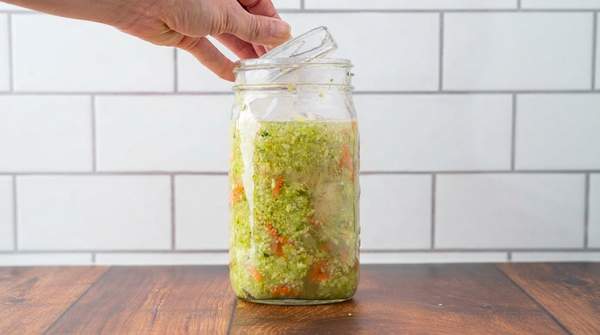
Scientists use advanced techniques like gas chromatography-mass spectrometry (GC-MS) and high-performance liquid chromatography (HPLC) to identify and quantify flavor compounds, especially in fermented foods, according to current research on flavor compounds in fermented food. These tools provide a detailed chemical blueprint, moving beyond subjective taste. For example, a study on Chinese spicy cabbage (CSC) found 47 volatile flavor compounds (VFCs), revealing the intricate chemistry even in simple dishes, as reported by Effect of Different Cooking Methods on the Aroma and Taste Characteristics of Chinese Spicy Cabbage. What we perceive as "good taste" often originates from specific chemical compounds and their interactions, making flavor development a predictable science rather than just an art.
Mastering Flavor: Techniques and Their Chemical Impact
Boiling Chinese spicy cabbage (CSC) generates specific aroma compounds like nonanal, geranyl acetate, and linalool, all with an odor activity value (OAV) greater than 1, meaning they actively contribute to the dish's aroma, according to effect of different cooking methods on the aroma and taste ... - pmc. These compounds did not exist before cooking. Stir-frying CSC, however, yields a different set of new volatile compounds, including 1-octen-3-one and (E)-2-nonenal, each also exceeding an OAV of 1. Distinct profiles show how different cooking methods precisely control flavor outcomes. Furthermore, cooking can increase CSC's total titratable acidity, altering taste balance. Culinary mastery is thus shifting from inherited tradition to an applied chemical science, where understanding reactions unlocks unprecedented control over taste, allowing cooks to intentionally build and layer flavors.
When Chemistry Goes Wrong: Avoiding Undesirable Tastes
Chemists developed synthetic polymers to reduce smoky flavors in wines from wildfire-exposed grapes, according to axial. Synthetic polymers help vintners preserve quality against environmental threats. Similarly, citric acid, even at low concentrations (0.007% to 0.073%), diminished the sweetness of sucrose solutions (0.5% to 20.0%), with a stronger effect at lower sugar levels, as published in Nature. Acidity can suppress sweetness, not just add sourness. Further research indicates biscuits made with xylitol, a sugar substitute, show volatile compound profiles similar to those with sucrose, including undesirable Maillard reaction markers, according to pmc.ncbi.nlm.nih.gov. Some fundamental flavor reactions persist across different carbohydrate sources, limiting how much substitutes can truly diverge from traditional flavors and highlighting the need for precise chemical solutions to mitigate off-flavors, rather than just swapping ingredients.
The Future of Flavor: Precision and Innovation
Virginia Tech researchers conducted the first formal sensory study on American whiskey aging, providing scientific insight into this traditionally intuitive process, according to fst. A systematic approach deepens our understanding of how time and environment chemically transform spirits. Metabolic engineering and enzyme technology further allow precise tailoring of flavor compounds in fermented foods, as detailed in pmc.ncbi.nlm.nih.gov, meaning future fermented products can be engineered for optimal taste. Chemical understanding is also crucial for plant-based alternatives. Cierra James, for instance, analyzes tuna's distinct flavor compounds to replicate them in plant and cell-culture alternatives, according to fst. Companies developing these alternatives are set to revolutionize the food industry by moving beyond imitation to precisely engineer novel taste experiences and sustainable options.
What are the most important culinary techniques for flavor?
Important culinary techniques for flavor often involve controlled chemical reactions. For instance, fermentation introduces beneficial microorganisms that produce acids, alcohols, and esters, creating complex savory and tangy notes. Roasting and caramelization, driven by the Maillard reaction, develop hundreds of new aromatic compounds responsible for rich, browned flavors.
How does cooking method affect food taste?
Cooking methods significantly alter food taste by influencing chemical reactions within ingredients. Boiling, for example, can extract water-soluble compounds and create new volatile compounds like nonanal, while stir-frying introduces higher, direct heat, leading to different reaction pathways that generate distinct flavors such as 1-octen-3-one. The specific method dictates the temperature, moisture levels, and exposure to air, all of which control the formation or degradation of flavor compounds.
What is the science behind taste perception in food?
Taste perception in food involves a complex interplay between taste receptors on the tongue and olfactory receptors in the nose. Our tongue detects five basic tastes—sweet, sour, salty, bitter, and umami—through specialized receptor cells that bind to specific chemical compounds. The brain then integrates these signals with aromas detected by the nose, along with texture and temperature information, to create the holistic "flavor" experience.
As the culinary world increasingly embraces chemical precision, food innovators, from chefs to scientists like Cierra James, will likely leverage detailed chemical blueprints to engineer entirely new, sustainable, and optimized taste experiences by 2026, moving beyond intuition to predictable flavor mastery.