The EU-Mercosur trade deal threatens to flood markets with beef and animal feed, products directly tied to rampant deforestation and heavy pesticide use across South America. This economic push unfolds even as a systematic review of 349 articles, published between 2015 and 2022, reveals a profound scientific consensus: global food systems urgently need transformative change for environmental health and human well-being. Policy divergence impacts everything from the air we breathe to the food on our plates, highlighting a future shaped by conflicting priorities.
Here lies a critical tension: scientific consensus and rising consumer demand champion sustainable food systems, yet powerful international trade agreements and entrenched industrial agriculture actively fuel environmental degradation. The path ahead appears fractured, with economic policy often clashing dramatically with ecological necessity and collective well-being.
Persistent conflict between scientific imperatives and economic policy suggests a widespread transition to truly sustainable food systems will remain elusive without significant political will and systemic reform. Such a failure will likely exacerbate climate-induced food insecurity for vulnerable populations worldwide.
Why Sustainable Food Systems are Critical for 2026
Climate change poses an immediate threat to global food production. Rising temperatures cause heat stress in staple crops, impairing growth and lowering yields. This climatic pressure compromises both the quantity and nutritional quality of our food supply, creating vulnerability in communities reliant on stable harvests.
Sustainable food systems offer a powerful solution. They build inherent resilience into food production, designed to deliver better nutrition even amid climate shocks and supply chain disruptions. Adaptability allows systems to absorb external pressures, securing consistent access to nourishing food. Nutrition Insight reports these systems act as a robust buffer against climate volatility, ensuring greater food stability. Without a rapid shift to these resilient models, global food security faces increasing instability, jeopardizing millions and risking widespread social unrest. Relying on traditional, climate-vulnerable agriculture is an unsustainable gamble; investing in sustainable food systems now is essential for safeguarding future generations against food insecurity and nutritional deficiencies.
The Promise of Resilience and Health in Food Production
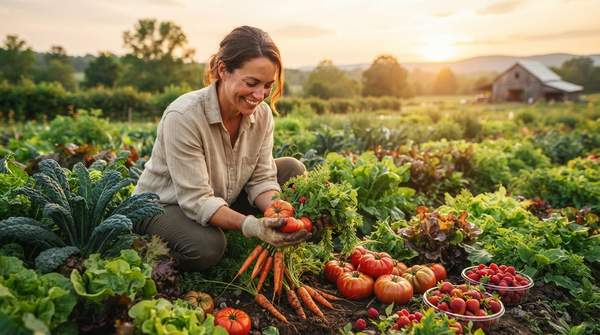
Sustainable agriculture offers tangible benefits beyond environmental protection, enhancing food quality, nutritional profiles, and system efficiency. Crops from regenerative practices may exhibit higher nutrient density; anecdotal research, highlighted by Nutrition Insight, points to elevated antioxidants and essential minerals. Potential for nourishing food directly meets consumer demand for healthier options, contributing to broader public health.
Food production systems also improve with farmer empowerment. Prioritizing soil health, biodiversity, and minimal chemical inputs yields produce with superior nutritional content and cultivates robust, adaptable food chains. Resilient chains better withstand environmental pressures like unpredictable weather or pest outbreaks, ensuring a consistent food supply and fostering greater local food security. Communities relying on diverse, locally grown crops and ecological balance become less susceptible to the widespread failures of monoculture-dependent industrial systems. Localized strength, combined with healthier food, promises a more secure and wholesome future for global food systems, prioritizing both planetary well-being and human nutrition.
Entrenched Obstacles and Perverse Incentives in Global Trade
Despite the clear advantages of sustainable agriculture, powerful economic interests create significant policy barriers. The impending EU-Mercosur trade deal exemplifies this, projected to increase imports of beef and soy directly linked to rampant deforestation and extensive pesticide use across South American ecosystems, according to Slow Food. Such agreements prioritize economic volume over ecological responsibility, further exacerbated by the global food system's reliance on a limited number of commodity crops.
Concentration on staples like soy and maize, primarily for animal feed, drives widespread environmental degradation. Monocultures not only clear land through deforestation but also significantly boost greenhouse gas emissions, Slow Food reports. Practices undermine biodiversity and deplete soil health, creating an unsustainable cycle of environmental decline.
Examples reveal how powerful economic interests and global trade agreements perpetuate damaging agricultural practices, directly conflicting with sustainability goals and the collective will of scientists and consumers. The EU-Mercosur deal highlights a critical policy failure: governments prioritize short-term economic gains from industrial agriculture over the long-term food security and environmental health demanded by science and consumers, a conclusion supported by Slow Food, Nature, and Nutrition Insight. Prioritization of immediate financial benefit over enduring ecological health actively sabotages the global transition to resilient food systems.
The Scientific Imperative for Food System Transformation
Scientific research overwhelmingly demands a fundamental transformation in global food systems. A meticulous review of 349 articles (2015-2022) examined the critical role of socio-economic drivers in achieving sustainable food system changes, as detailed in Nature. Literature confirms that reshaping how we produce, distribute, and consume food is not just an environmental concern, but a deeply intertwined socio-economic challenge requiring a holistic approach.
Piecemeal solutions, focusing on only one aspect of the food chain, are insufficient. Lasting change requires a comprehensive understanding of economic incentives, social equity, cultural practices, and governance structures, navigating complex interactions between policy, market forces, and community needs.
The scientific community provides undeniable evidence: global food security depends on integrating ecological principles with socio-economic realities. Ignoring this risks environmental catastrophe and widespread social instability, making sustainable food systems a necessity for urgent planetary needs.
Consumer Pressure and Future Directions for Sustainable Food Systems
A growing wave of consumer demand for sustainable and environmentally friendly health solutions signals a critical market shift, pressuring the food industry to adapt. Consumers actively seek products aligning with ethical values, prioritizing personal well-being and planetary health, according to Nutrition Insight. Evolving preference is a deeply rooted societal movement, driving food companies to re-evaluate their entire supply chains.
Companies relying on unsustainable supply chains, particularly those driven by trade agreements like the EU-Mercosur deal, not only degrade the environment but also undermine their own food source resilience against climate shocks. Sustainable systems, conversely, mitigate these risks, offering a more secure, adaptable, and ethically sound future. The market increasingly rewards transparency and genuine commitment to ecological responsibility.
Ultimately, the market appears poised to reward food corporations that genuinely commit to sustainable practices, likely redefining success in the industry by 2026 as both ecologically sound and deeply consumer-centric.