What Are Functional Foods and Why Do They Matter for CPG Brands in 2026?

The global functional food market is set to nearly double in less than a decade, soaring from USD 249.

RP
Ryan Patel

June 3, 2026 · 6 min read

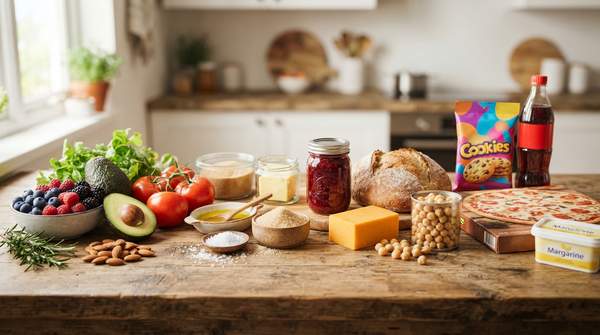
A bright, contemporary kitchen showcasing innovative functional food products from a CPG brand, symbolizing health and market growth.

The global functional food market is set to nearly double in less than a decade, soaring from USD 249.94 billion in 2026 to an estimated USD 403.98 billion by 2033, according to Coherent Market Insights. A growing consumer focus on health benefits beyond basic nutrition is reflected in the market's expansion, driving demand for products that offer more than basic sustenance. The market is projected to expand at a compound annual growth rate (CAGR) of 4.6% from 2026 to 2033, underscoring its rapid integration into daily diets as consumers increasingly seek proactive health solutions through food.

However, this massive expansion of functional foods and their health benefits is not guaranteed without overcoming consumer skepticism and ensuring transparent communication. The market’s long-term CPG brand leadership faces peril from a widespread failure to address consumer doubts and align with deeply held 'naturalness' expectations. Despite explosive growth projections, the foundational success of this market is not primarily driven by technological innovation, but by deeply subjective consumer perceptions of 'naturalness' and 'trust'.

CPG brands that strategically invest in product efficacy, clear communication of proven benefits, and sensory appeal will be best positioned to dominate this rapidly expanding, yet discerning, market. Success hinges on building trust, a factor often overlooked in growth-focused market strategies. Companies must recognize that consumer confidence, while intangible, is a critical vulnerability that influences purchasing decisions and long-term brand loyalty.

Beyond Basic Nutrition: Defining Functional Foods

Functional foods are products designed to provide health benefits beyond basic nutritional value, often by including fortified ingredients or specific compounds. For example, these foods might contain added vitamins, minerals, probiotics, or omega-3 fatty acids, targeting specific health outcomes. In 2025, the GCC functional food market value was USD 18.21 billion, according to Future Market Insights. The GCC functional food market's USD 18.21 billion value in 2025 highlights a strong and expanding global appetite for such products, indicating a consumer shift towards preventative health through diet.
Saudi Arabia is projected to record an 11.2% CAGR through 2036, signaling disproportionate expansion in specific regional hotspots. Saudi Arabia's projected 11.2% CAGR through 2036 suggests that global success for functional food CPG brands hinges on hyper-localized strategies rather than broad, undifferentiated approaches. Understanding unique socio-cultural influences and specific regional health priorities becomes essential for brands aiming to capture market share. The robust growth in the GCC region demonstrates a strong and expanding global appetite for functional food products, yet this growth depends on tailored communication and product development.

Key Product Categories Driving Market Expansion

Several product categories are significant contributors to the functional food market's expansion. In 2026, functional dairy products are projected to account for a 36.5% market share, according to Future Market Insights. This segment includes items like fortified yogurts with probiotics, vitamin D-enriched milks, and dairy alternatives. Simultaneously, the bakery and cereals segment is expected to hold 30.6% of the market share in 2026, as reported by Coherent Market Insights, encompassing functional breads, breakfast cereals fortified with fiber, and snack bars.

The 36.5% market share of functional dairy products and 30.6% share of the bakery and cereals segment underscore the market's versatility and its deep penetration into daily consumer habits. The 36.5% market share of functional dairy products and 30.6% share of the bakery and cereals segment indicate that consumers are integrating functional ingredients into everyday food items, moving beyond niche health supplements into mainstream grocery purchases. The integration of functional ingredients into everyday food items allows CPG brands to introduce health-optimizing options within familiar product forms, making functional benefits more accessible and less intimidating to a wider audience. The integration into established food categories facilitates easier adoption and sustained consumer engagement.

Ingredient Trends and Retail Channels

Specific ingredients also drive significant market shares, with the carotenoids segment estimated to capture 25.1% of the global functional food market share in 2026, according to Coherent Market Insights. Carotenoids are plant pigments known for their antioxidant properties and roles in vision and immune health, found in foods like carrots and leafy greens. The carotenoids segment's estimated 25.1% market share, driven by its focus on specific beneficial compounds, guides product development. Alongside ingredient focus, distribution remains critical for consumer access.

Traditional retail channels, specifically hypermarkets and A Class Stores, are expected to hold a 40.2% share in 2026, as noted by Future Market Insights. The 40.2% share of traditional retail channels creates a paradox for functional food brands, requiring them to build deep consumer confidence and communicate complex benefits in environments optimized for quick, often superficial, purchasing decisions. The challenge lies in conveying scientific efficacy and 'naturalness' claims clearly on a crowded shelf. The 25.1% market share of carotenoids and 40.2% share of traditional retail channels indicate clear pathways for product development and consumer access, but also highlight the need for effective in-store communication strategies.

Building Trust: The Consumer Acceptance Challenge

Despite projected market growth, consumer acceptance of functional foods remains highly conditional, presenting a critical vulnerability for CPG brands. Acceptance depends on a complex interplay of product attributes such as taste, price, and demonstrated efficacy, as well as individual characteristics like age, education, and health consciousness, according to Nature. Additionally, socio-cultural influences, including prevailing norms, trusted information sources, and overall brand trust, significantly shape consumer decisions. The complex interplay of product attributes, individual characteristics, and socio-cultural influences highlights that while market reports project growth based on quantifiable metrics, the actual realization of this growth depends on qualitative factors.

Companies shipping functional food products without a robust, transparent communication strategy around proven benefits and 'naturalness' are trading short-term market share gains for long-term brand fragility, as consumer skepticism, highlighted by Nature, remains a potent threat. The market's dependence on intangible consumer trust and 'naturalness' expectations is often overlooked in purely growth-focused strategies. Clear communication of proven benefits, alignment with naturalness expectations, and sensory appeal are critical for building consumer confidence in functional foods. Brands must strategically address both product quality and transparent communication to overcome consumer skepticism and build lasting trust, ensuring that products truly deliver on their promises in a way that resonates with consumer values.

Regional Spotlight: UAE's Surging Demand

What factors contribute to the rapid growth of functional foods in the UAE?

The United Arab Emirates is expected to expand at an 11.0% CAGR through 2036, according to Future Market Insights. The United Arab Emirates' expected 11.0% CAGR through 2036 suggests a strong consumer inclination towards health-optimizing foods, likely driven by increasing health awareness among a diverse population and a preference for convenience-driven wellness solutions. The 11.2% CAGR in Saudi Arabia and 11.0% CAGR in the UAE signal that CPG brands must pivot from generic global strategies to deeply localized approaches, understanding that 'trust' and 'efficacy' are culturally nuanced concepts. This localized approach is essential for connecting with consumers in these fast-evolving markets.

The Future of Functional Foods: Key Growth Areas

One significant and growing segment within the functional food landscape is sports nutrition, reflecting a broader consumer trend towards performance enhancement and optimized health. The sports nutrition segment is projected to hold 31.7% of the functional food market share in 2026, according to Coherent Market Insights. This projected 31.7% market share in 2026 indicates a strong consumer trend towards performance-enhancing and health-optimizing food choices, driven by active lifestyles and a desire for tailored dietary solutions that support physical well-being, much like the drive for functional design in compact living areas. This segment provides a clear opportunity for brands to innovate with targeted functional ingredients.

With traditional retail channels like hypermarkets dominating sales, functional food brands face the critical challenge of translating complex health benefits into compelling, trustworthy messages that resonate with consumers making rapid purchasing decisions on the shelf, a hurdle many are currently failing to clear. Companies shipping functional food products without a robust, transparent communication strategy around proven benefits and 'naturalness' are trading short-term market share gains for long-term brand fragility. CPG brands must prioritize transparent communication and align with consumer expectations of naturalness to ensure long-term brand stability and leadership. By 2033, success for these brands will depend on their ability to build enduring consumer trust through clear, scientifically backed messaging, coupled with products that truly deliver on their promised health benefits.