In July 2024, Athletic Brewing, a non-alcoholic beer company, secured an $800 million valuation after a $50 million financing round. The $800 million valuation after a $50 million financing round signals a seismic shift in consumer beverage preferences. Alcohol consumption has steadily declined over the past decade, yet the market for sophisticated non-alcoholic alternatives is experiencing explosive growth and significant investment. The beverage industry now faces a sustained transformation, with zero-proof options moving from niche alternatives to mainstream staples, poised to challenge traditional alcohol's dominance.
The Multi-Billion Dollar Shift to Zero Proof
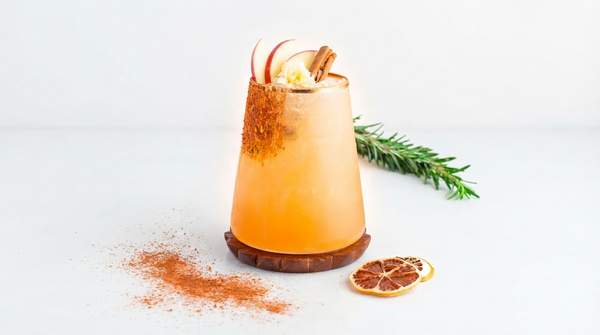
The ready-to-drink (RTD) mocktail market hit $8.26 billion in 2023, according to bevsource. Off-premise nonalcoholic drink sales in the U.S. reached $509.6 million that same year, bevsource reports. The ready-to-drink (RTD) mocktail market hitting $8.26 billion in 2023 and off-premise nonalcoholic drink sales reaching $509.6 million confirm non-alcoholic beverages are no longer a niche. They are a significant, established segment, proving consumers actively seek zero-proof options in retail.
Investors Pouring into the Alcohol-Free Future
General Atlantic led a $50 million equity financing round for Athletic Brewing in July 2024, valuing the company at $800 million, Forbes reported. A $50 million equity financing round for Athletic Brewing, valuing the company at $800 million, coupled with a projected $261 million increase in the mocktail market from 2024 to 2029 (Technavio), confirms this isn't a fleeting trend. Investors are betting on a permanent shift away from traditional alcohol, forcing established beverage giants to either acquire or innovate aggressively in the non-alcoholic space or risk irrelevance.
A Generation Choosing Wellness Over Alcohol
A staggering 77% of consumers prioritize health, bevsource reports. A staggering 77% of consumers prioritizing health aligns with Gen Z, who drink 20% less than millennials and prioritize mental health in their alcohol choices, according to bevsource. Brands failing to offer sophisticated non-alcoholic options are actively alienating the next generation of high-spending consumers, missing a critical demographic shift.