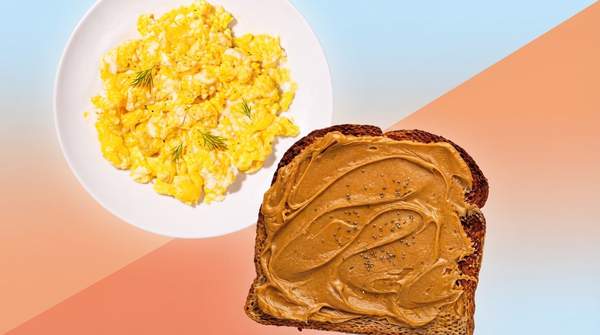
Consider this: a serving of pretzels can raise your blood sugar more rapidly than a serving of Greek yogurt. Understanding the glycemic index and its effect on blood sugar is a crucial component of navigating modern nutrition, offering insights into why different carbohydrate-containing foods can have vastly different impacts on our bodies. This tool provides a framework for understanding how our food choices directly influence energy levels, hunger cues, and long-term health markers.
In a world where dietary information can often feel overwhelming and contradictory, the glycemic index (GI) offers a more scientific lens through which to view carbohydrates. It moves beyond simple classifications of "good" or "bad" carbs, instead providing a numerical value that helps quantify a food's immediate effect on blood glucose. This is particularly relevant today, as global health trends show a significant rise in conditions related to blood sugar regulation. Research published in a 2020 article on the National Center for Biotechnology Information (NCBI) platform notes that the worldwide prevalence of diabetes has nearly doubled since 1980, underscoring the growing need for accessible, evidence-based tools to help people make more informed dietary choices.
What Is the Glycemic Index (GI) and How Is It Measured?
The glycemic index is a scale that ranks carbohydrate-containing foods by how quickly they cause blood sugar levels to rise after being eaten. It is a standardized, scientific measure designed to compare the physiological effect of different carbohydrates. When we consume foods containing carbohydrates, our digestive system breaks them down into glucose, which then enters the bloodstream. The speed and magnitude of this process determine a food's GI value.
Think of it like different types of fuel for a fire. Some fuels, like paper, ignite very quickly and burn out fast, creating a rapid, high flame. This is analogous to a high-GI food. Other fuels, like a dense log, catch fire slowly and provide a steady, sustained release of energy. This is similar to a low-GI food. The GI provides a way to predict which foods will cause a quick spike in blood sugar and which will offer a more gradual supply of energy.
The measurement process is highly controlled. To determine a food's GI, a specific quantity of that food containing 50 grams of available carbohydrate is given to test subjects after an overnight fast. Their blood sugar levels are then measured at regular intervals over the next two hours. The results are plotted on a graph and compared to the blood sugar response from a reference food, which is typically pure glucose or white bread. Pure glucose is assigned the maximum GI value of 100. The GI value of the test food is then calculated based on how its blood sugar response curve compares to that of the reference food. According to the Academy of Nutrition and Dietetics, this measure ranks foods on a scale from zero to 100 based on this comparison. The scale is generally categorized into three tiers:
- Low GI: 55 or less
- Medium GI: 56 to 69
- High GI: 70 or more
It's important to note that a food's GI ranking applies only when it is consumed by itself on an empty stomach. Real-world meals are far more complex, a factor that we will explore later. However, as a foundational tool, the GI provides valuable insight into the inherent properties of individual carbohydrate sources.
How Different Foods and Preparation Methods Impact Blood Sugar
The glycemic index of a food is not a fixed number; it is influenced by a variety of factors. Various carbohydrate-containing foods affect blood sugar levels differently based on their composition and how they are prepared. Understanding these variables is key to applying the GI concept effectively in a daily diet. High-GI foods are digested and absorbed quickly, leading to a rapid increase in blood glucose and a corresponding surge in insulin. Conversely, low-GI foods are digested and absorbed at a slower rate, causing a more gradual and smaller rise in blood sugar levels.
Several key factors determine where a food falls on the glycemic index scale:
- Type of Starch: Starches are composed of two types of molecules: amylose and amylopectin. Foods high in amylopectin (like white potatoes) are digested more easily and thus have a higher GI. Foods with a higher amylose content (like legumes) are more resistant to digestion and have a lower GI.
- Fiber Content: Soluble fiber, in particular, can slow down the digestion and absorption of carbohydrates. It forms a gel-like substance in the digestive tract, which delays stomach emptying and the subsequent rise in blood sugar. This is why whole-grain bread typically has a lower GI than white bread, and an apple (GI of 28) has a much lower GI than apple juice.
- Presence of Fat and Protein: Including healthy fats and lean protein with a carbohydrate source can significantly lower the overall glycemic response of a meal. Both fat and protein slow down stomach emptying, which in turn slows the rate at which carbohydrates are converted to glucose and absorbed into the bloodstream.
- Cooking and Processing Methods: The way a food is cooked can alter its chemical structure and, therefore, its GI. Generally, the more cooked or processed a food is, the higher its GI. For example, al dente pasta has a lower GI than pasta that is cooked until soft. A whole potato has a lower GI than mashed potatoes, which have a larger surface area for digestive enzymes to act upon.
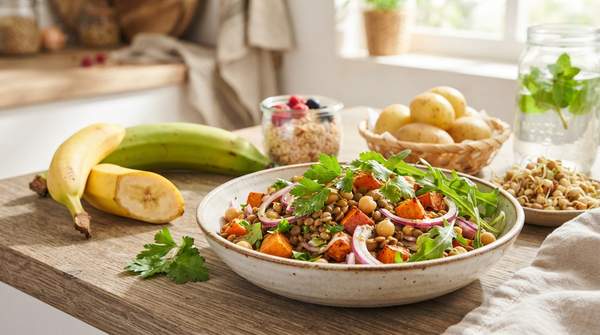
- Ripeness: The ripeness of a fruit can also affect its GI. As a fruit ripens, its complex carbohydrates break down into simple sugars. A green, unripe banana has a lower GI than a ripe, yellow banana with brown spots because it contains more resistant starch.
The GI of a single food is limited because, as Diabetes Canada notes, it changes with serving size, cooking method, and food combinations. This complexity led to the development of the glycemic load (GL) concept.
From Glycemic Index (GI) to Glycemic Load (GL): A More Complete Picture
The glycemic index (GI) measures how quickly a carbohydrate raises blood sugar, but not the *amount* of carbohydrate in a typical serving. The glycemic load (GL) addresses this, becoming an essential complementary measure. One U.S. Department of Veterans Affairs analysis considers GL a more accurate tool for assessing real-world carbohydrate impact, as it accounts for both carb quality (GI) and quantity per serving.
GL is calculated as follows:
GL = (GI of the food x Grams of available carbohydrate in a serving) / 100
Watermelon provides a classic example of why this distinction matters. Watermelon has a high GI, often cited around 74. Based on this number alone, one might assume it's a poor choice for blood sugar management. However, watermelon is mostly water and contains relatively few carbohydrates per serving. A standard 100-gram serving has only about 5 grams of available carbohydrate. Using the formula, its glycemic load is calculated as (74 x 5) / 100, which equals a GL of just 3.7. This demonstrates that despite its high GI, a typical serving of watermelon has a very small effect on blood sugar.
GL is categorized into three levels:
- Low GL: 10 or less
- Medium GL: 11 to 19
- High GL: 20 or more
Integrating GI and serving size, GL offers a more practical assessment of a food's blood glucose effect. It clarifies why a small high-GI portion can have less impact than a large medium-GI portion. This comprehensive view enables flexible diet planning, emphasizing overall meal composition and portion control over strict GI-based food exclusion.
| GI Category | GI Value Range | Examples |
|---|---|---|
| Low Glycemic Index | 55 or less | Apples, lentils, Greek yogurt, carrots, chickpeas, most nuts |
| Medium Glycemic Index | 56 - 69 | Brown rice, whole wheat bread, sweet potatoes, sucrose (table sugar) |
| High Glycemic Index | 70 or more | White bread, pretzels, white potatoes, watermelon, instant oatmeal |
Why the Glycemic Index Matters for Health and Wellness
Considering the glycemic index promotes stable blood sugar levels. Favoring low-GI foods, which release glucose slowly, helps individuals avoid sharp blood sugar spikes and crashes from high-GI foods. This stability leads to consistent energy, improved mental focus, and reduced hunger between meals, impacting daily health, disease prevention, and overall wellness.
For individuals managing diabetes or prediabetes, the GI can be an invaluable tool. A diet centered on low-GI carbohydrates helps in managing post-meal blood glucose levels, which is a cornerstone of diabetes care. According to Diabetes Canada, a low-GI diet may offer several benefits, including helping to manage existing blood sugar levels and potentially decreasing the risk of developing type 2 diabetes. The organization also suggests that such a diet may help lower the risk of heart disease and stroke.
Beyond blood sugar control, some research suggests that a low-GI eating pattern can be beneficial for weight management. The slower digestion of low-GI foods can enhance feelings of fullness and satiety, which may help reduce overall calorie intake. The rapid insulin spike caused by high-GI foods can also promote fat storage, whereas the gentler insulin response from low-GI foods is less likely to do so. However, it's important to note that weight management is complex, and while a low-GI diet can be a helpful strategy, it should be part of a broader approach that includes portion control, regular physical activity, and a balanced intake of all macronutrients.
The most practical application of the GI is not to obsessively track numbers but to use it as a guide for making smarter food swaps. For instance, choosing whole-grain bread instead of white bread, sweet potatoes instead of white potatoes, or adding lentils to a soup can effectively lower the overall glycemic load of a meal. Pairing a higher-GI food with a source of protein, fat, or fiber—like having a baked potato with steamed broccoli and grilled chicken—can also blunt its effect on blood sugar, creating a more balanced and sustained energy release.
Frequently Asked Questions
Is the Glycemic Index the same as the Glycemic Load?
No, they are different but related concepts. The Glycemic Index (GI) measures how quickly a carbohydrate-containing food raises blood sugar, ranking it on a scale of 0-100. It is a measure of carbohydrate *quality*. The Glycemic Load (GL), on the other hand, takes into account both the GI and the *quantity* of carbohydrate in a specific serving of food. GL provides a more practical, real-world estimate of a food's impact on blood sugar and is often considered a more useful tool for meal planning.
Does the cooking method affect a food's GI?
Yes, absolutely. Preparation and cooking methods can significantly alter a food's GI. In general, longer cooking times and methods that use more water tend to break down starches and make them easier to digest, which increases the GI. For example, pasta cooked al dente has a lower GI than pasta cooked until it is very soft. Similarly, a whole baked potato has a lower GI than instant mashed potatoes.
Are all low-GI foods automatically healthy?
Not necessarily. The glycemic index is a measure of a food's effect on blood sugar, not its overall nutritional value. Some low-GI foods can be high in calories, saturated fat, or sodium. For example, ice cream can have a relatively low GI because its high fat content slows glucose absorption, but it is not typically considered a health food. It is crucial to use the GI as one tool among many, alongside general principles of healthy eating that emphasize whole, minimally processed foods like fruits, vegetables, lean proteins, and whole grains.
How can I lower the glycemic impact of my meal?
You can lower the overall glycemic impact of a meal by strategically combining foods. One of the most effective methods is to pair a carbohydrate source, especially a higher-GI one, with foods containing protein, healthy fats, and fiber. For instance, adding avocado (fat and fiber) and chicken (protein) to a meal with rice will slow down digestion and lead to a more gradual increase in blood sugar. Choosing non-starchy vegetables, which are high in fiber and low in carbohydrates, is another excellent way to lower a meal's glycemic load.
The Bottom Line
The glycemic index (GI) helps understand how carbohydrates affect blood sugar, moving beyond 'good' or 'bad' labels. High-GI foods cause rapid blood glucose spikes, while low-GI foods offer a slower, sustained energy release. For practical application, glycemic load (GL) accounts for portion size, giving a more accurate picture of a meal's real-world impact.
Use GI as a guide, not rigid rules. The most effective approach is a balanced diet of whole, minimally processed foods, applying GI principles for informed swaps and meals that support stable energy and long-term health.